 how-to
How to Prevent CoolSculpting Complications: A Safety Guide
Table of Contents
- CoolSculpting Candidacy Requirements: Screening Out Risk Before You Start
- How to Choose a CoolSculpting Provider: Certification and Clinical Oversight
- Equipment Maintenance and Calibration: The Hidden Safety Factor
- Understanding Paradoxical Adipose Hyperplasia (PAH) and Other CoolSculpting Complications
- Post-CoolSculpting Recovery Tips: Minimizing Discomfort and Supporting Healing
- When to Contact a Medical Professional After Treatment
- Conclusion: Taking Control of Your CoolSculpting Safety
- Frequently Asked Questions
Last Updated: September 11, 2026
CoolSculpting Candidacy Requirements: Screening Out Risk Before You Start
The most effective way to prevent CoolSculpting complications is to screen for them before a single applicator touches your skin. CoolSculpting candidacy requirements exist precisely because cryolipolysis is not appropriate for every body, and the providers who take this seriously are the ones who keep adverse events rare. At Elite Laser Center Medical Spa, our consultations begin with a full medical history review, because the right candidate is a safe candidate.
Medical History Review and Contraindications
A thorough medical history review is the single strongest safeguard against a poor outcome. Certain conditions make cryolipolysis unsuitable: cryoglobulinemia, cold agglutinin disease, paroxysmal cold hemoglobinuria, and Raynaud's phenomenon all involve abnormal responses to cold (peer-reviewed research). Hernias in the treatment area, active infections, and pregnancy are also standard contraindications. Bring a complete medication list and disclose prior surgeries. If a clinic skips this conversation entirely, treat that as your first red flag.
Why Cryolipolysis Isn't Right for Everyone
Cryolipolysis is designed for stubborn subcutaneous fat that resists diet and exercise, not for weight loss or skin tightening (the FDA). If you have significant skin laxity, a large volume of fat to lose, or a body mass index well outside the normal range, a different approach may serve you better. Honest providers say so during the consultation, even when it costs them the booking.
How to Choose a CoolSculpting Provider: Certification and Clinical Oversight
Choosing the right provider matters more than the device itself. Two clinics can own identical machines and deliver very different safety profiles, because outcomes track with who is operating the device, how they were trained, and how much clinical oversight sits behind the treatment room. This is the part of complication prevention most articles skip, so treat it as your vetting checklist.
Verify the License, Not Just the Title
Every state licenses physicians, nurses, and mid-level providers through its medical board or board of nursing, and most boards publish a free license lookup. Before you book, ask for the full name and license type of the person who will operate the device, then look that name up yourself. A "certified technician" or "aesthetician" may be perfectly competent, but the license type tells you what they are legally allowed to do and who is responsible when something goes wrong. If a clinic will not give you a name, that is your answer.
What Manufacturer Certification Actually Means
The device manufacturer runs its own training and certification program, and clinics that complete it typically receive a certificate and appear in the manufacturer's provider locator. Ask two questions: which specific device generation is the clinic certified on, and when was the most recent training completed? Certification is not a one-time lifetime credential; applicator designs, treatment protocols, and safety guidance are updated over time, and a clinic certified years ago on an older platform may not have current training. Cross-check the clinic against the manufacturer's own find-a-provider tool rather than relying on a badge on the website.
Read the Oversight Structure
Ask directly: is a physician the medical director of record, and are they on site, on call, or absent? Many states require a written delegation or standing-order agreement between a supervising physician and the staff performing the treatment. A clinic that can describe that structure clearly is a clinic that has thought about complications. A clinic that cannot explain who the supervising physician is, or that names a doctor who has never met the staff, is a red flag.
Questions to Ask During Your Consultation
Ask these before you commit to any package:
- Who will perform my treatment, and what is their full name and license type?
- Which device generation do you use, and when was your most recent manufacturer training?
- Who is the supervising physician, and how do they handle after-hours concerns?
- How many treatments has this clinic performed, and how long have they operated?
- What is your written protocol if I develop numbness, prolonged pain, or a firm mass?
- Which applicator sizes do you stock, and how do you choose between them?
- What does your aftercare and follow-up schedule look like, and who answers if I call with a problem?
The Consultation Itself Is a Test
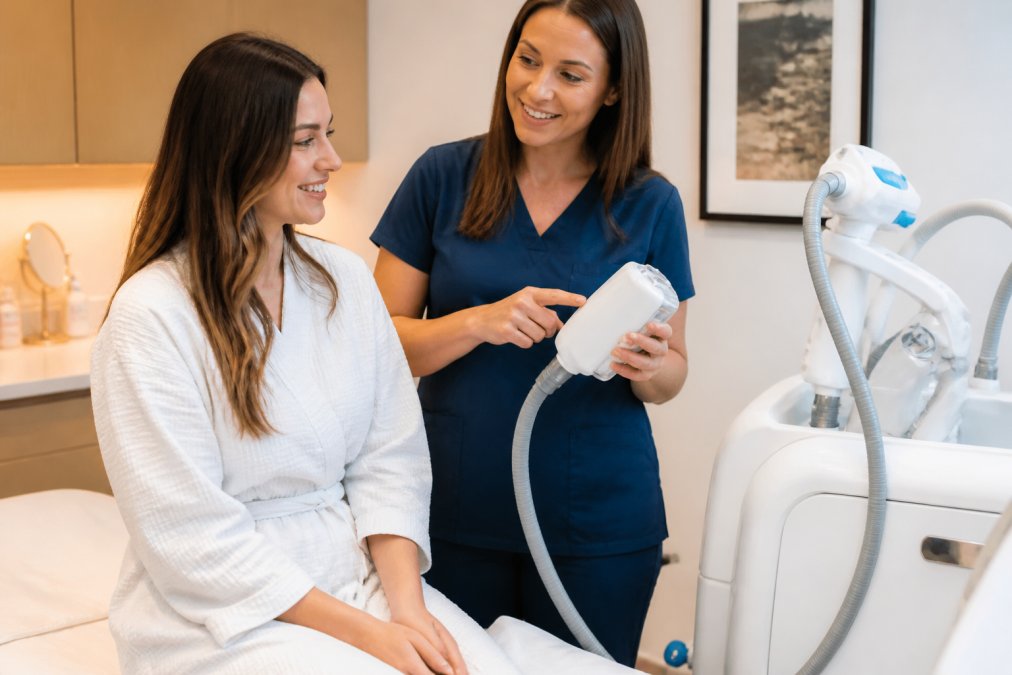
A safe consultation includes a real medical history review, a hands-on assessment of the treatment area, an honest discussion of whether you are a good candidate, and a written consent form that lists specific risks including paradoxical adipose hyperplasia. A sales-first consultation skips the history, promises a number of inches, and pushes a package before you have asked a single question. If you feel rushed, that is data.
Equipment Maintenance and Calibration: The Hidden Safety Factor
Equipment maintenance and calibration rarely appear in patient-facing guides, yet they directly affect how safely cryolipolysis is delivered. Treatment applicators use vacuum suction and controlled cooling; if suction intensity drifts or temperature sensors fall out of calibration, the margin between effective cooling and thermal injury narrows. This is the section most competitors leave out entirely, so use it as your device-vetting guide.
How the Device Is Supposed to Protect You
Modern cryolipolysis systems build in several safety layers: temperature sensors at the applicator plate, vacuum sensors that confirm a proper seal, and software cutoffs that pause treatment if readings fall outside a set range. Those layers only work if the hardware is genuine, the software is current, and the sensors have been calibrated on schedule. A machine that has been dropped, repaired with aftermarket parts, or run on outdated firmware can lose one or more of those protections without any visible warning to the patient.
Genuine Versus Counterfeit or Gray-Market Devices
Counterfeit and gray-market cryolipolysis devices exist, and they are a known driver of complications because their cooling control and sensor accuracy are not held to the same standard. A few practical checks:
- Ask to see the device's serial number and confirm it against the manufacturer's records or provider locator.
- Look for the manufacturer's branding, model name, and a legible regulatory clearance label on the device itself, not just on the marketing brochure.
- Ask which software version the device is running and whether the clinic has applied the manufacturer's most recent updates.
- Be cautious of unusually low per-cycle pricing, which often signals a device that was not purchased through authorized channels.
What a Real Service Record Looks Like
Manufacturers publish a recommended service and calibration interval, and authorized service is performed by trained technicians who document the work. Ask to see the service log and check three things: the date of the last service, whether it falls within the manufacturer's recommended interval, and whether the technician was authorized. A clinic that maintains equipment properly usually has this documentation ready and is happy to show it. A clinic that cannot produce a log, or that shows a gap of years, is a clinic to walk away from.
Calibration Drift and Why It Matters to You
Calibration drift is the slow loss of accuracy in a sensor over time. It does not announce itself. A drifting temperature sensor may cause the device to cool slightly more or less than intended, which can mean either an ineffective treatment or a higher risk of thermal injury to the skin. Because drift is invisible to the patient, the only protection is a clinic that follows the manufacturer's calibration schedule and keeps records. If a provider cannot tell you when the device was last calibrated, assume it has not been.
Questions to Ask About the Device
- Which manufacturer and model will be used on me?
- Can I see the serial number and the last service record?
- When was the device last calibrated, and by whom?
- Is the software current with the manufacturer's latest release?
- How many applicators do you stock, and how are they maintained between uses?
Understanding Paradoxical Adipose Hyperplasia (PAH) and Other CoolSculpting Complications
Paradoxical adipose hyperplasia (PAH) is a rare complication in which the treated fat grows instead of shrinking, producing a firm, enlarged, well-defined mass in the treatment area (PubMed). It typically appears weeks to months after the procedure and does not resolve on its own. PAH is the complication patients ask about most, and it is the reason candidacy screening and provider experience matter so much. The exact cause is not fully understood, and treatment usually requires surgical correction.
Common Side Effects vs. Serious Adverse Reactions
Most side effects are temporary and expected. Serious reactions are uncommon but require prompt medical attention.
| Symptom | Typical Onset | Expected Course | Action Needed |
|---|---|---|---|
| Erythema, edema, bruising | Within hours | Resolves in days to weeks | Monitor at home |
| Numbness, tingling | Immediate to days | Fades over weeks | Mention at follow-up |
| Post-procedure inflammation | First 24-48 hours | Settles with time | Cold compress as advised |
| Hyper-pigmentation | Days to weeks | Often fades gradually | Discuss with provider |
| Firm, enlarging mass (possible PAH) | Weeks to months | Does not self-resolve | Contact a medical professional |
| Severe or worsening pain | Any point | Not expected | Seek evaluation promptly |
Post-CoolSculpting Recovery Tips: Minimizing Discomfort and Supporting Healing
Post-CoolSculpting recovery tips are simple, but following them consistently shortens discomfort. Expect tenderness, swelling, and temporary numbness in the treated area. Wear loose clothing, stay hydrated, and return to normal activity as you feel able. Gentle movement supports circulation without stressing the tissue. Avoid aggressive massage of the area unless your provider specifically recommends it.
Post-Treatment Lymphatic Drainage and Circulation
Supporting lymphatic circulation helps your body clear the disrupted fat cells and reduce post-procedure inflammation. Light walking, adequate water intake, and gentle movement throughout the day all encourage lymphatic flow. Some clinics recommend specific massage techniques; ask yours whether they advise it and how soon after treatment to begin. Fat cell apoptosis, the process by which cooled fat cells are gradually cleared, unfolds over weeks, so patience matters as much as any single habit.
When to Contact a Medical Professional After Treatment
Contact a medical professional if you notice a firm, enlarging mass in the treated area, severe or worsening pain, skin changes that blister or break down, or symptoms that persist well beyond the expected window. These signs can indicate a serious adverse reaction rather than routine recovery. Do not wait for a scheduled follow-up if something feels wrong. Early evaluation gives you more options.
Conclusion: Taking Control of Your CoolSculpting Safety
Preventing CoolSculpting complications is less about luck and more about the decisions you make before and after treatment. Vet your provider, disclose your full medical history, ask about equipment maintenance, and follow your recovery protocol. If you want a consultation built around safety and candidacy, Elite Laser Center Medical Spa offers personalized treatment plans, nurse-performed or nurse-supervised care, and a long-standing record in the region. Schedule a Consultation and get clear answers about whether CoolSculpting is right for you.
Frequently Asked Questions
What are the chances of CoolSculpting going wrong?
Serious complications from CoolSculpting are uncommon when the procedure is performed by a qualified provider using properly maintained equipment. Most patients experience temporary side effects like redness, swelling, bruising, and numbness that resolve within days to weeks. The most discussed rare complication is paradoxical adipose hyperplasia (PAH), where treated fat grows instead of shrinking. Choosing an experienced, certified provider and completing a thorough medical history review are your best safeguards against complications.
What disqualifies you from CoolSculpting?
CoolSculpting candidacy requirements exclude people with certain conditions. You may be disqualified if you have cryoglobulinemia, cold agglutinin disease, paroxysmal cold hemoglobinuria, or Raynaud's phenomenon. Other disqualifiers include pregnancy, active hernias in the treatment area, recent surgery near the site, or implanted medical devices. A thorough medical history review during your consultation helps identify these contraindications. Be honest about all medications, conditions, and prior procedures so your provider can assess whether cryolipolysis is safe for you.
How can I ensure my CoolSculpting provider is qualified?
Ask about the provider's certification, training, and clinical oversight. In a medically supervised setting, a nurse or physician should perform or directly supervise your treatment. Request information about how many CoolSculpting procedures they have performed and whether the practice uses maintained, calibrated equipment. A reputable provider will welcome these questions and explain their safety protocols. You can also check whether the practice has recognition from the device manufacturer, which often indicates advanced training and adherence to best practices.
What should I avoid doing after a CoolSculpting session?
For the first few days after treatment, avoid strenuous exercise, saunas, hot tubs, and extreme temperatures on the treated area. Skip alcohol and anti-inflammatory medications unless your provider approves them, as these can affect healing. Do not massage or apply pressure to the treated area beyond what your provider recommends. Gentle walking supports lymphatic circulation and may help reduce swelling. Follow your provider's specific post-CoolSculpting recovery tips, and contact them if you notice severe pain, unusual skin changes, or symptoms that worsen instead of improve.