 how-to
Preparing Your Skin for Professional Facial Treatments
How to Prepare for a Facial | Elite Laser Center
Preparing for a facial starts with knowing which treatment you have booked. HydraFacial, DiamondGlow, chemical peels, and microneedling have different preparation and recovery requirements. A routine that suits one service may not suit another.
At Elite Laser Center & Med Spa in Stony Brook, a consultation helps connect your skin concerns with an appropriate treatment. Before your appointment, request written instructions for the exact service and tell the team about changes in your skin or health. Preparation supports a thoughtful treatment plan; it cannot guarantee results or prevent every complication.
Start With the Treatment You Booked
Ask for the treatment name, any planned add-ons, and the expected recovery. An exfoliating enhancement can change the instructions for an otherwise familiar facial. Do not assume that your usual monthly appointment and a first-time resurfacing treatment need identical preparation.
Treatment | What to clarify beforehand | Recovery to discuss |
|---|---|---|
HydraFacial | Selected steps, serums, and optional enhancements | Possible sensitivity and when usual skincare can resume |
DiamondGlow | Exfoliation settings, serum selection, and product pauses | Temporary redness, tightness, or sensitivity |
Chemical peel | Exact formulation and its specific pre-care | Whether visible shedding is expected and how to care for it |
Traditional microneedling | Device, treatment intensity, and suitability | Skin sensitivity, makeup timing, and aftercare |
RF treatment | Exact device and modality, provider training, and individual risks | Recovery specific to the procedure performed |
Elite's HydraFacial and DiamondGlow pages explain these facial options. Discuss enhancements before treatment rather than adding services based only on an upcoming event.
Bring Your Skincare and Medication Lists
Product photos are helpful if you cannot remember ingredient names. Include prescriptions, nonprescription products, supplements, and recent acne treatments. Mention retinol or tretinoin, exfoliating acids, benzoyl peroxide, and any home peels or devices.
The American Academy of Dermatology's peel-preparation guidance recommends discussing medicines, supplements, cold sores, scarring, and previous cosmetic procedures. Also tell your provider about allergies, pregnancy or breastfeeding, and any recent reaction to skincare.
Do not change prescription medication yourself
Disclose blood thinners and medicines that affect bleeding or healing. Do not stop prescribed aspirin, anticoagulants, acne medication, or other prescriptions simply to keep an aesthetic appointment. Any change should be coordinated with the prescribing clinician. Treatment may need to be adjusted or postponed instead.
Mention current or previous isotretinoin use specifically. Suitability and timing require assessment; an online checklist is not clearance to proceed.
Ask Which Products to Pause
There is no single stopping interval for every facial. Ask which products to pause, when to stop them, and when they can restart. Some treatment plans include prescribed preparation, so do not automatically remove every active ingredient from your routine.
For example, DiamondGlow's manufacturer guidance advises discontinuing retinoids and exfoliating products at least three days before treatment. Confirm how that applies to your products, and coordinate any prescription changes with your prescriber. That instruction should not be transferred to every peel or microneedling procedure.
Avoid adding a home peel, vigorous scrub, or unfamiliar exfoliant to make your skin feel extra clean before an appointment. Tell the team if a product has already caused stinging, peeling, or irritation.
Call Ahead About Sunburn, Irritation, or Cold Sores
Contact the practice before coming in if you develop sunburn, an open area, a rash, a cold sore, or a suspected infection. Explain what changed and when it started. The provider can determine whether to proceed, modify the service, or reschedule.
DiamondGlow is contraindicated on compromised skin, including sunburned, irritated, or broken skin, active weeping acne, and cold sores. A treatment advertised as noninvasive still requires assessment.
For microneedling, the AAD advises waiting when concerns such as sunburn, infection, or certain inflamed pimples are present. This does not mean every breakout rules out every facial; some services target acne-related concerns. Identify the concern before choosing the treatment.
Prepare for Your Specific Chemical Peel
Elite's chemical-peel and resurfacing options include VI Peel, SkinMedica peels, and the SkinCeuticals Red Carpet Peel. The page also describes PRX-T33 as a separate topical revitalization option. These services have different preparation and recovery profiles.
Ask which formula is planned, what changes it is intended to address, and whether visible peeling is expected. Elite notes that VI Peel commonly involves shedding beginning several days after treatment. A lighter treatment may involve less visible exfoliation, but less peeling does not remove the need for aftercare.
Disclose recent waxing, threading, dermaplaning, laser treatment, injections, or other resurfacing. Ask how services should be spaced. For medium and darker skin tones, discuss the provider's experience with similar skin and the possibility of pigment changes.
Separate Traditional Microneedling From RF Treatment
Traditional microneedling and RF-assisted procedures are different. Elite uses the Lumenis Legend Pro+ platform for its RF treatment services. Ask which modality is planned and request instructions for that procedure.
The FDA's microneedling guidance identifies risks including bleeding, bruising, infection, pigment changes, and cold-sore reactivation. Discuss skin conditions, healing problems, allergies to anesthetics or metals, and medicines that affect suitability.
RF procedures also deliver energy into tissue. The FDA has reported serious complications with certain uses of RF microneedling, including burns, scarring, fat loss, disfigurement, and nerve damage. Ask about provider training, anticipated benefit, alternatives, and recovery. Preparation cannot eliminate those risks.
Do not use a home needle device to prepare your skin. Ask what products may be applied during and after professional treatment; ordinary cosmetic serums are not automatically appropriate for freshly treated skin.
Your Appointment Checklist
- Confirm the exact service and any enhancements.
- Provide your product, medication, and supplement lists.
- Report recent treatments, tanning, irritation, or health changes.
- Obtain written product-pause and restart instructions.
- Ask about makeup, facial hair removal, and arrival preparation.
- Confirm expected recovery and a contact number for concerns.
- Share important event dates before finalizing treatment timing.
If asked to arrive without makeup, cleanse gently rather than scrubbing. Do not apply numbing cream or another preparation unless specifically instructed. Bring questions and enough information for your provider to review your routine.
Plan Aftercare Before Treatment Day
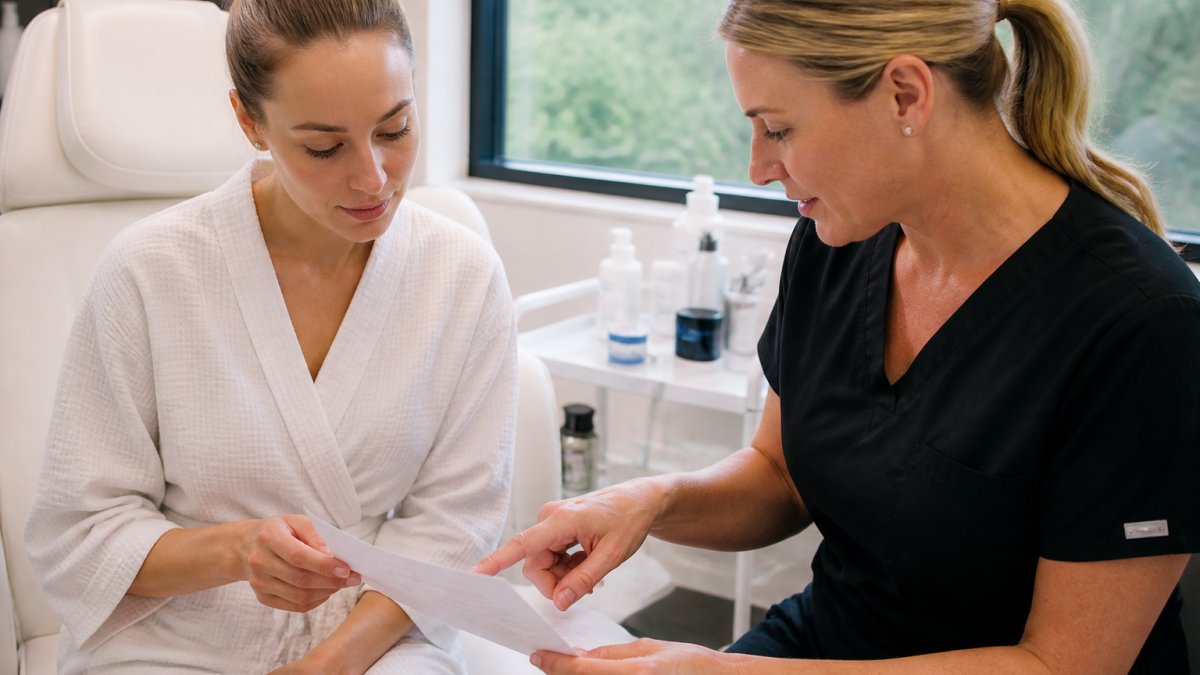
Ask which cleanser, moisturizer, and sun protection to use afterward, and when they may be applied. Confirm when makeup, exercise, swimming, and active skincare can resume. Follow the instructions for your treatment rather than copying another client's routine.
There is no universal event-ready date. A first treatment deserves extra scheduling flexibility, especially when peeling or a recovery period is expected. Discuss weddings, travel, outdoor activities, and photography before booking.
For clients in Stony Brook and throughout Suffolk County, a personalized skin consultation is a practical first step. Call (631) 675-2500 to discuss your appointment. If you already have a reaction after treatment, contact the treating provider directly.
Frequently Asked Questions
Should I stop retinol before a facial?
Ask for instructions specific to the treatment and product. A pause may be recommended, but the same interval does not apply to every service. Coordinate prescription changes with your prescriber.
Can I have a facial with a breakout or sunburn?
Call first. Suitability depends on the skin concern and treatment. Sunburn, broken skin, cold sores, or infection can require postponement; an acne-focused service may be appropriate for different circumstances.
Should I stop blood thinners before microneedling?
Do not stop them on your own. Tell your provider what you take and involve the prescribing clinician. A different treatment or later appointment may be appropriate.
How soon before a wedding should I schedule treatment?
Ask your provider to plan around the exact procedure, your previous response, and the event date. A familiar facial and a first peel or RF procedure should not share an automatic timetable.
Can I combine several facial services in one visit?
Only when your provider recommends an appropriate protocol. Separate services should not be combined simply because each is available. Ask how the combination changes preparation, risks, and recovery.
Sources
- American Academy of Dermatology: Chemical peels—preparation
- American Academy of Dermatology: Microneedling
- DiamondGlow: FAQs and important safety information
- FDA: Microneedling devices
- FDA: Potential risks with certain uses of RF microneedling
Prepared with AI assistance for editorial and clinical review before publication. General education does not replace individualized medical advice or your treating provider's instructions. Treatment suitability, results, and recovery vary.