 How-to
9 Long-Term Skincare Habits for Body Transformation
Practical care for hydration, sun protection and skin comfort during weight changes, workouts and professional body treatments.
Last Updated: November 5, 2026
When you are working toward a body transformation, skincare can be easy to overlook. You may be focused on exercise, changes in your weight or a professional treatment while wondering what to do about dryness, rubbing, stretch marks or loose skin.
A useful body skincare routine starts with a few repeatable habits: gentle cleansing, regular moisturizing and sun protection. Adjust the details to how your skin actually feels and to any treatment instructions you receive. A change in body size does not automatically mean you need an entirely new set of products.
These nine habits can help you care for your skin while keeping expectations clear about what skincare and professional treatments can accomplish.
1. Build a Routine You Can Repeat
Choose a manageable starting routine with a cleanser your skin tolerates, a moisturizer suited to your needs and sunscreen for exposed skin. Keeping the products where you use them can make the routine easier to maintain.
For example, leave your body moisturizer near your towel and keep sunscreen accessible before an outdoor walk. Add other products only when you have a specific concern to address.
Review the routine when you notice a change, such as dryness during colder weather or rubbing from new workout clothes. Make adjustments based on those observations instead of assuming that a particular phase of weight loss requires stronger products.
2. Cleanse Gently and Keep Showers Comfortable
Hot water, harsh cleansers and vigorous scrubbing can aggravate dry skin. Choose warm water, a mild cleanser and a gentle touch. If dryness is an issue, a fragrance-free product is a sensible starting point.
The American Academy of Dermatology’s dry-skin guidance recommends keeping baths and showers to about five to ten minutes. Pat dry with a towel rather than rubbing. aad.org
Adapt cleansing to your activity and skin needs. After exercise, clean away sweat and change out of damp clothing without repeatedly scrubbing the same areas. Skin that feels tight or stings afterward may need a gentler approach.
3. Apply Moisturizer While Skin Is Still Slightly Damp
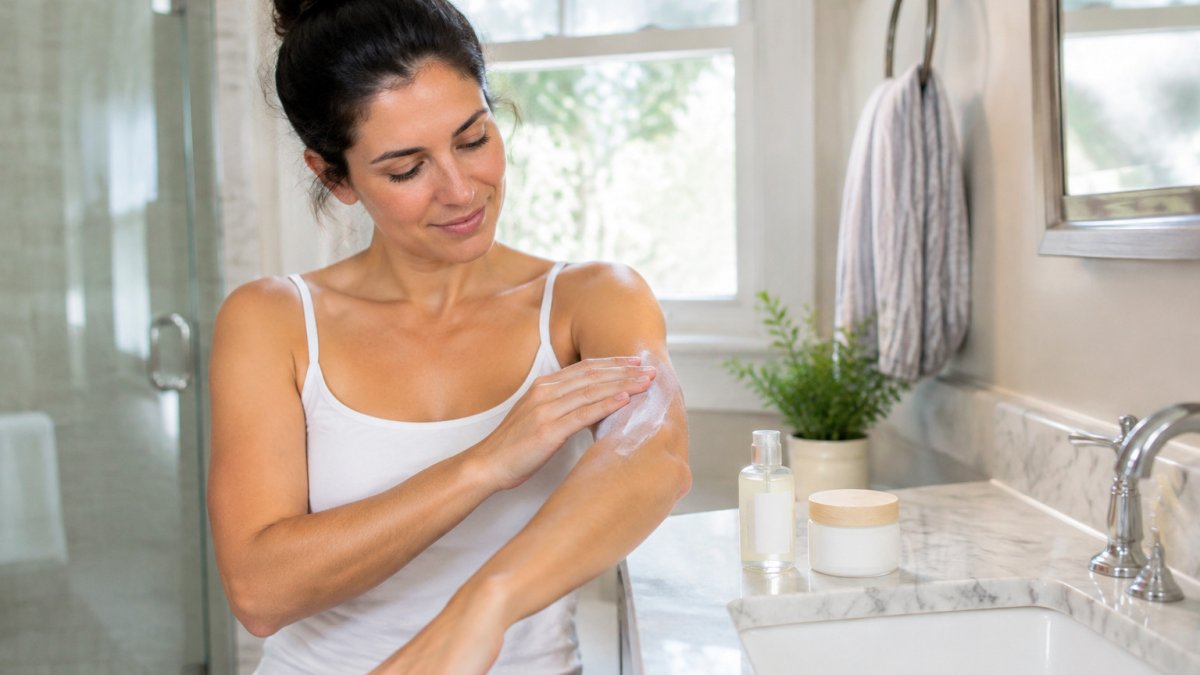
After bathing, gently pat away excess water and apply moisturizer while your skin remains slightly damp. This helps trap water and reduce moisture loss, as explained in the AAD’s moisturizer guidance. aad.org
Dry areas such as the shins, elbows and knees may benefit from a cream or ointment. Other areas may feel comfortable with a lighter lotion. Let your skin’s response guide the choice.
Moisturizer can improve comfort and the appearance of dryness. It does not remove excess skin or replace a treatment plan for a persistent rash. If dryness remains troublesome despite gentle care, ask a clinician to assess it.
4. Extend Sun Protection Beyond Your Face
Remember the chest, arms, legs, ears, back of the neck and other uncovered areas when you spend time outdoors. Choose sunscreen labeled broad spectrum, water resistant and SPF 30 or higher.
Apply it before going outside. Reapply about every two hours outdoors and after swimming or sweating, following the product directions. One morning application is not an all-day plan.
Clothing, a hat and shade provide additional protection. The AAD’s sunscreen instructions explain coverage and reapplication. Keep these habits through cooler months and cloudy weather, too. aad.org
5. Reduce Friction During Workouts and Daily Activities
Pay attention to places where skin rubs against clothing or other skin, particularly when walking, exercising or trying a new activity. Comfortable clothing, well-fitting shoes and fabrics that move moisture away from the skin can help reduce rubbing.
The AAD’s guidance on preventing chafing and blisters also describes using a small amount of petroleum jelly on areas prone to friction. Check with your treating provider before applying products to a recently treated area. aad.org
If rubbing becomes painful or the skin is damaged, address the cause instead of continuing through the discomfort. Recurrent rashes or broken skin deserve medical assessment.
6. Introduce New Products One at a Time
Changing your cleanser, lotion and exfoliant together makes it harder to identify what helped or caused irritation. Start with one new product and keep the rest of your routine familiar while you assess it.
For a new cosmetic skincare product, the AAD recommends testing a small area for seven to ten days before broader use. Follow the product’s directions, including whether it should be rinsed off. aad.org
Stop using a product that causes a reaction. Home testing cannot rule out every possible allergy or irritation, and it does not replace professional assessment for persistent symptoms. Follow your clinician’s instructions for prescription products.
7. Treat Exfoliation as Optional and Individual
You do not need to scrub your body several times a week to have an effective routine. Exfoliation may help some rough areas, but the method and frequency should depend on your skin, the products you already use and any recent procedures.
Avoid exfoliating skin that is irritated, sunburned, cut or otherwise damaged. Combining strong exfoliants with retinoids or other irritating products can make sensitivity worse. The AAD’s exfoliation guidance also notes that aggressive exfoliation can contribute to dark marks, especially in darker skin tones. www.aad.org
Ask your provider when exfoliation is appropriate after treatment. Increasing intensity is not a reliable shortcut to smoother skin.
8. Follow the Aftercare Plan for Your Exact Treatment
“Body contouring” covers different technologies, so there is no single recovery routine that fits every procedure. Ask which products to use, when to resume your usual activities and how to contact the team with questions.
After fat-freezing treatments, temporary effects can include redness, swelling, bruising, discomfort or numbness. More significant complications are possible, including paradoxical adipose hyperplasia, in which a treated fat bulge enlarges and may require surgery. The FDA’s body-contouring overview explains these distinctions and risks. FDA
Report persistent, worsening or unexpected changes to your treating provider. A moisturizer may help ordinary dryness when appropriate, but it does not replace assessment of a possible complication or act as a fat-reduction treatment.
9. Notice Changes and Reassess Your Plan
As you care for your skin, get familiar with its usual appearance and comfort. A brief note about a new product, workout or treatment can help you recognize when a problem started.
Seek assessment for a persistent rash, a wound that does not heal, or a new or changing spot that concerns you. Ask your dermatologist what skin-examination schedule is appropriate for your personal risk.
Review cosmetic goals separately. If loose skin causes repeated irritation or affects comfort, discuss it with a qualified clinician. If your concern is a fat bulge or muscle tone, identify that goal before choosing a procedure. Clear goals make it easier to judge progress fairly.
What Can Skincare Improve During a Body Transformation?
Moisturizing and sun protection support skin care, but different concerns have different causes and treatment options.
Concern | What skincare may help with | What to keep in mind |
|---|---|---|
Dryness or flaking | Moisture retention, comfort and a smoother surface appearance. | Persistent symptoms may need assessment. |
Fine, crepey-looking texture | Hydration can temporarily soften the appearance of surface lines. | Moisturizer does not remove significant excess skin. |
Stretch marks | Some treatments may make them less noticeable, particularly when addressed early. | Stretch marks are scars and cannot be completely erased. |
A localized fat bulge | Routine care can keep the skin surface comfortable. | Topical skincare does not perform localized fat reduction. |
The AAD explains the limitations of skin-firming creams and stretch-mark treatments. Hydration can improve appearance without producing the same effect as removing excess skin or addressing an underlying body-shape concern. aad.org
How Professional Treatments Fit Into the Plan
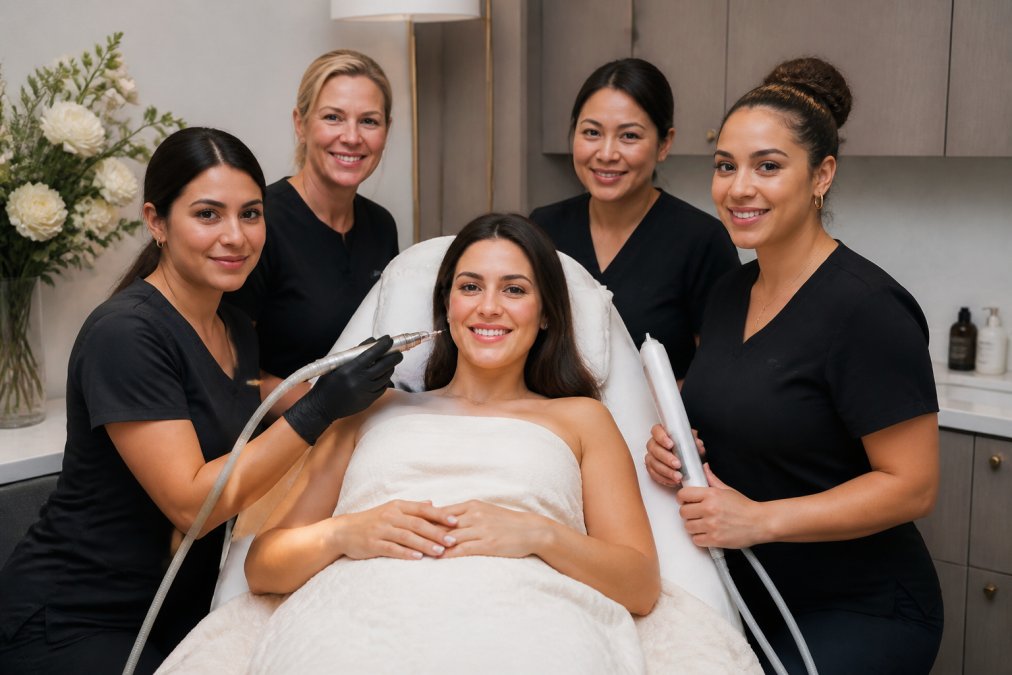
At Elite Laser Center & Med Spa in Stony Brook, the starting point is an assessment of your goals and the area you want to address.
CoolSculpting Elite uses controlled cooling to reduce suitable localized fat pockets. It is not a weight-loss treatment or a treatment for removing significant loose skin. Elite Laser Center
CoolTone uses magnetic muscle stimulation to strengthen, tone and firm muscles in the abdomen, buttocks and thighs. It addresses muscle rather than fat reduction. Each treatment requires its own suitability assessment. Elite Laser Center
Your consultation should explain the expected benefit, limitations, risks, treatment schedule and aftercare. Everyday skincare remains part of caring for the skin’s surface; professional treatment selection depends on the specific concern.
Frequently Asked Questions
What Is a Good Skincare Routine for the Whole Body?
Start with gentle cleansing, moisturizer suited to your skin and sun protection for uncovered areas outdoors. Add other products only when they address a specific need. Adjust for dryness, friction or irritation rather than assuming that a complicated routine will work better.
Should I Change My Skincare Routine When I Lose Weight?
Not automatically. Keep products that remain comfortable and effective. If you develop new dryness, chafing or another concern, adjust the relevant step and seek advice when needed. Weight change alone does not establish that your skin needs richer products or more exfoliation.
Can Body Lotion Tighten Loose Skin or Erase Stretch Marks?
Moisturizer can improve hydration and make the surface look smoother, but it cannot remove significant excess skin. Stretch marks may fade or become less noticeable with treatment, but they are permanent scars. A clinician can help you understand which options are realistic for your concern.
How Should I Care for My Skin After CoolSculpting?
Follow the written instructions provided for your treatment. Ask which products are appropriate, what temporary effects to expect and when to contact the team. Report persistent, worsening or unexpected symptoms. General skincare advice should not replace your individual aftercare plan.
Plan Your Next Step With Elite Laser Center
If you are considering professional body treatments, bring your goals and questions to a consultation at Elite Laser Center & Med Spa. We can discuss the available options, review suitability and explain how treatment may fit into your plan.
Plan Your Next Step With Elite Laser Center
If you are considering professional body treatments, bring your goals and questions to a consultation at Elite Laser Center & Med Spa. We can discuss the available options, review suitability and explain how treatment may fit into your plan.
Request your complimentary consultation or call 631-675-2500.
Visit us at 2308 Nesconset Highway, Stony Brook, NY 11790, serving Stony Brook, Nesconset, Setauket and nearby Suffolk County communities.
Individual treatment results and recovery vary. This article provides general education; follow the advice of your treating healthcare professional.
Sources and Further Reading
- American Academy of Dermatology: Dermatologists’ Tips for Relieving Dry Skin
- American Academy of Dermatology: How to Pick the Right Moisturizer
- American Academy of Dermatology: How to Apply Sunscreen
- American Academy of Dermatology: How to Test Skincare Products
- American Academy of Dermatology: Stretch Marks
- FDA: Non-Invasive Body Contouring Technologies