 How-to
7 Things to Know Before an Acne Facial Consultation in Stony Brook
What to bring, which questions to ask, and how to decide whether facial care fits your skin’s needs.
Last Updated: November 3, 2026
What to bring, which questions to ask, and how to decide whether facial care fits your skin’s needs.
Updated November 3, 2026
When your skin keeps breaking out, it is tempting to book the strongest facial or try another product. An acne facial consultation in Stony Brook gives you a chance to slow down, review what you are already using, and discuss whether a facial is an appropriate next step.
At Elite Laser Center & Med Spa, the starting point is an individual consultation about your concerns, medical history, and goals. You can ask about professional skincare without assuming you need a particular device, peel, or series of appointments.
The main point: A facial consultation can help you explore care for congestion, hydration, and skin texture. It does not replace a dermatologist’s diagnosis or medical acne treatment. Bring your medication and product lists, and ask what is suitable before committing to treatment.
1. The Consultation Should Start With Your Skin History
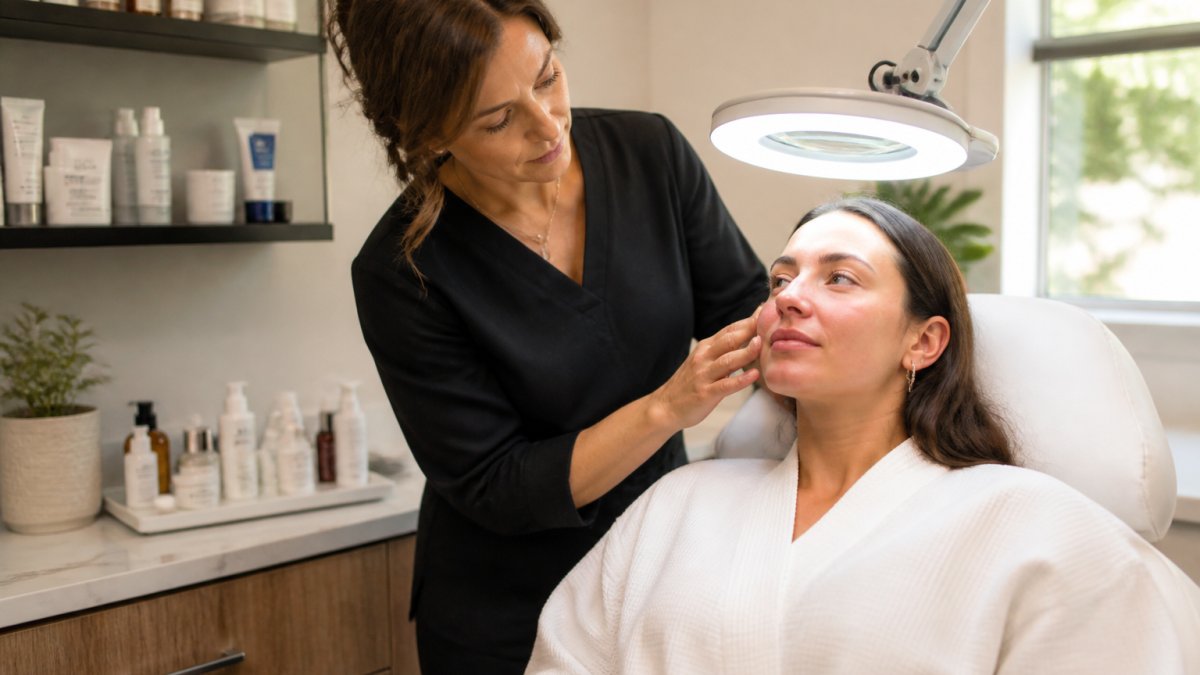
A useful consultation is a conversation before it becomes a treatment recommendation. Be ready to describe where your breakouts appear, how long they have been happening, whether they hurt or itch, and what you have already tried.
Explain your priorities in your own words. “My pores feel clogged,” “everything stings,” and “I keep getting painful lumps” describe different concerns. Mention whether you are hoping for short-term improvement before an occasion or help planning ongoing skincare.
The provider may examine your skin and discuss visible congestion, irritation, texture, or marks. The exact assessment depends on your circumstances and the professional’s scope of practice; it should not be presented as a guaranteed five-step procedure. Ask who will assess you and who would perform any recommended treatment.
2. Bring Your Products, Medications, and Questions
You do not need a complicated preparation routine. A short written list or a few phone photos can make the appointment more useful.
- Current products: cleanser, moisturizer, sunscreen, serums, exfoliants, and spot treatments, including how often you apply them.
- Medications: prescriptions, over-the-counter acne products, and supplements. Include oral and topical treatments.
- Treatment history: previous facials, peels, extractions, or other procedures, including reactions and approximate dates.
- Relevant concerns: allergies, sensitive skin, cold sores, pregnancy or breastfeeding, and anything your treating clinician has advised you to avoid.
- Flare photos: pictures showing what your skin looks like between appointments.
Ask whether to arrive without makeup. If treatment might take place the same day, request preparation instructions in advance. Do not stop prescribed medication on your own. Any proposed medication change should be discussed with your prescriber.
There is no need to scrub, pick, or aggressively exfoliate before the consultation. Seeing your usual routine and concerns is more useful than trying to make your skin look “ready.”
3. Congestion and Painful Acne Need Different Conversations
Blackheads and whiteheads are different from deep, painful breakouts. A consultation should help clarify whether the appointment is about cosmetic congestion or whether you need medical assessment first.
The American Academy of Dermatology explains that deep, painful acne needs a dermatologist’s help. If you have painful lumps, worsening breakouts, or scarring, arrange that evaluation rather than waiting through a facial package.
A dermatologist can also help with mild acne; you do not have to wait until it becomes severe. Seek medical advice if breakouts persist despite consistent care, leave troublesome dark marks, or affect your confidence or daily life. Sudden changes or symptoms that concern you deserve discussion with a medical clinician.
Be clear about your main goal. Active breakouts, flat discoloration, and changes in skin texture are separate concerns, and one facial should not be promised to correct all of them.
4. Extractions and Exfoliation Are Optional
A facial should be chosen around suitability, rather than a checklist of steps everyone must receive. Ask why exfoliation or extractions are recommended and whether your current products make your skin more sensitive.
The AAD describes dermatologist-performed acne extraction as a procedure used for blackheads and whiteheads. It is not a substitute for controlling the causes of ongoing acne, and clogged pores can return. Deep, painful lesions need medical assessment, not forceful squeezing during a facial.
You can ask for a gentler plan or postpone treatment if your skin is irritated. Do not assume that discomfort, stronger exfoliation, or a longer list of procedures means you are receiving better care.
5. Ask What Each Treatment Is Intended to Do
Elite offers HydraFacial, DiamondGlow, customized facials, chemical peels, and Dermalux Tri-Wave MD LED therapy. Availability does not mean every option is appropriate for every breakout or every skin type.
For example, HydraFacial at Elite combines cleansing, exfoliation, extraction, and hydration, with customization based on the assessment. Ask which parts of the treatment are suitable for your skin today and what improvement is realistic.
If a peel, LED session, or enhancement is suggested, ask what concern it targets, what evidence supports that use, and what risks or recovery apply. An optional enhancement should have a clear purpose, rather than being treated as a necessary upgrade.
Before booking, ask:
- What is the goal of this treatment for my skin?
- What would make you postpone or change it?
- What is included in the price, and which enhancements cost extra?
- When should we reassess before purchasing more visits?
- Should I consult my dermatologist before proceeding?
6. Home Care Should Support Your Existing Plan
A facial does not replace a consistent routine or prescribed treatment. The AAD recommends gentle cleansing, avoiding scrubbing and picking, and giving acne treatment time to work rather than repeatedly switching products.
Its acne skincare guidance also recommends sun protection, including a broad-spectrum, water-resistant SPF 30 or higher sunscreen when outdoors. Look for products labeled non-comedogenic or “won’t clog pores.”
Bring these principles into your consultation by asking for clear instructions that fit what you already use. Avoid leaving with several new active products and no explanation of how they work together. If you have a dermatologist’s regimen, share it so that professional skincare can be considered alongside it.
For ongoing facial care, you may ask about Elite’s Skin Care Club. Discuss suitability, membership terms, and any separately priced enhancements before enrolling; membership is not a medical acne treatment plan.
7. Set Expectations and Know the Follow-Up Plan
Ask what change the proposed facial is intended to achieve and when it makes sense to assess it. A smoother or more hydrated appearance after an appointment is different from controlling recurring acne. Neither one visit nor a prepaid series guarantees clear skin.
Recovery depends on the treatment, products used, and your skin. Get written aftercare instructions, including what to avoid, when to resume your usual products, and whom to contact with concerns.
Do not automatically label worsening breakouts or persistent irritation as “purging.” Contact the provider for advice and seek medical assessment for concerning symptoms. At follow-up, review what changed, what did not, and whether the next step should be different.
Frequently Asked Questions
Can I book a consultation without having a facial that day?
You can request an appointment to discuss your concerns and options. Confirm the appointment type when booking, particularly if you want an assessment before deciding about treatment.
Should I stop my retinoid before the appointment?
Tell the provider its name and how often you use it. Ask for instructions for the specific service being considered, and check with your prescriber before changing a prescription.
Will I need a series of facials?
That should not be assumed before assessment. Ask what each visit would aim to accomplish and when to review the plan. Ongoing acne may require medical treatment rather than additional facials.
Can a facial remove acne scars?
Do not expect a routine facial to remove established scars. Ask for an assessment that distinguishes active breakouts, discoloration, and scarring before considering treatment options.
Request Your Acne Facial Consultation in Stony Brook
If you live in Stony Brook, Setauket, Nesconset, Port Jefferson, or nearby Suffolk County communities, start with a conversation about your skin and your goals.
Request a free consultation at Elite Laser Center & Med Spa, or call (631) 675-2500. We are located at 2308 Nesconset Highway, Route 347, Stony Brook, NY 11790.
This article provides general education and does not diagnose acne or replace individualized medical advice. Treatment suitability and results vary.