 How-to
Laser Hair Removal for PCOS: What to Expect
A practical guide to hormonal hair growth, treatment suitability, maintenance, and planning your care in Stony Brook.
Last Updated: November 10, 2026
Unwanted chin or jawline hair can add another task to an already busy day. If you have PCOS and are considering laser hair removal, you deserve clear information about what it may achieve, its limitations, and the commitment involved—without pressure or judgment.
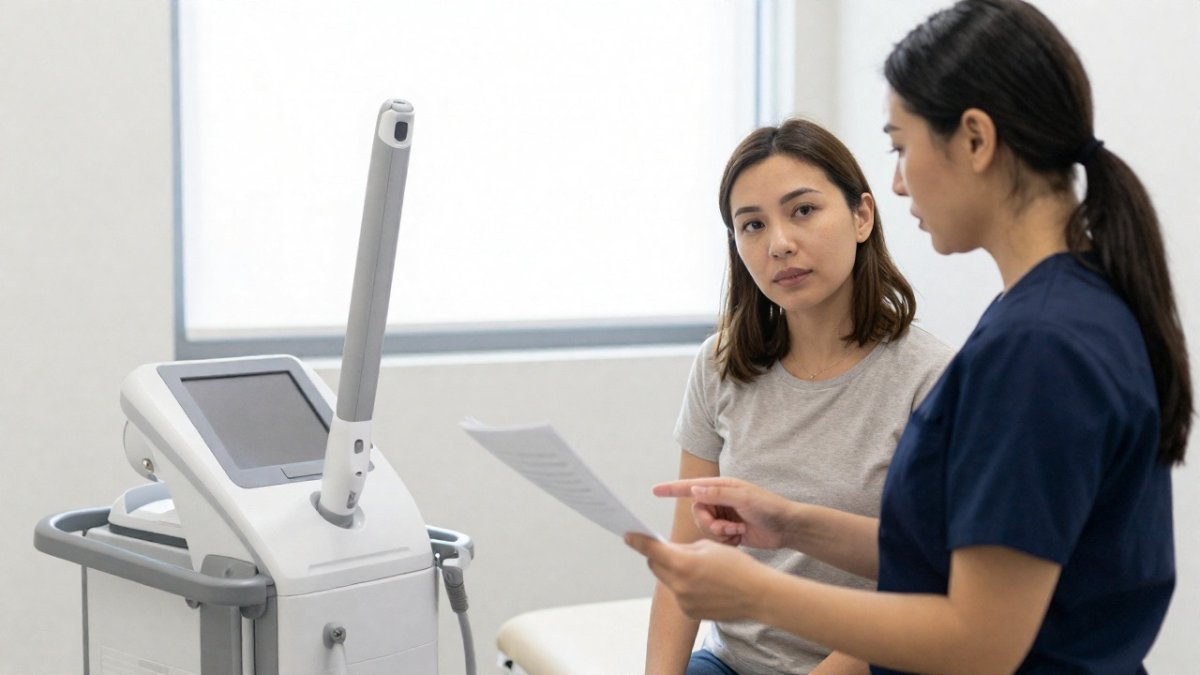
Laser can reduce suitable pigmented hair, but it does not treat PCOS itself. At Elite Laser Center & Med Spa in Stony Brook, a consultation is the starting point for discussing your skin, hair, goals, and treatment history.
Can Laser Hair Removal Help With PCOS?
Hair reduction is different from hormone treatment
PCOS can involve increased androgen activity, which may contribute to coarse hair on the face or body. Not everyone with PCOS experiences the same pattern, and not every unwanted facial hair is caused by PCOS.
Laser uses light absorbed by pigment in hair to damage targeted follicles. It does not correct hormone levels or prevent every future hair from developing. The goal is long-term reduction, not a promise of permanently hair-free skin.
The International Evidence-based PCOS Guideline supports considering laser and light treatments for facial hirsutism. It also notes that people with PCOS may require more laser sessions than those with idiopathic hirsutism. No single session count is right for everyone.
Keep your medical care separate but coordinated
Hair removal can sit alongside care from a dermatologist, gynecologist, or endocrinologist. Medical management may address the underlying condition while laser addresses suitable hair. Your prescribing clinician should guide any medication decisions; do not start, stop, or change treatment on your own.
Sudden or rapidly worsening hair growth deserves medical assessment rather than an assumption that it is simply an existing PCOS symptom.
Which Hair Is Most Likely to Respond?
Color and thickness matter
Dark, coarse hair generally provides a better target than fine, lightly pigmented hair. Blonde, white, gray, and red hair usually respond poorly. In a mixture of dark and gray hair, treating the dark strands does not mean the gray strands will respond too.
A consultation should examine the actual hairs you want treated. Fine facial fuzz should not automatically be included simply because nearby coarse hairs are suitable.
Skin tone affects treatment selection
People with darker skin tones may be candidates, but melanin in the skin also absorbs light energy. Appropriate wavelength, settings, cooling, and provider experience matter. No device or setting is risk-free for everyone.
Ask which device and wavelength would be used for your skin and why. A manufacturer name alone is not enough to determine suitability. Your assessment should also consider recent tanning, previous pigment changes, and reactions to earlier treatments. A test spot may be recommended; it cannot guarantee that complications will not occur.
Facial and body areas need individual plans
Chin, upper lip, jawline, chest, and abdomen may have different hair patterns and treatment needs. Spacing should reflect the area and response rather than a universal schedule. Facial treatment warrants particular discussion of fine hair and the possibility of increased growth.
Can Laser Sometimes Increase Facial Hair?
Yes. Paradoxical hypertrichosis means increased hair growth in or around a treated area rather than the intended reduction. Research has associated it particularly with face and neck treatment. Its likelihood varies across studies and individuals, so a single percentage would not predict your personal risk.
Ask about this before starting, especially when considering fine facial hair. If you notice increasing density or spread, request reassessment rather than continuing an unchanged course automatically.
Other possible complications include burns, blisters, pigment changes, and scarring. Provider training and treatment selection matter, but they do not eliminate all risk.
Laser Hair Removal Versus Electrolysis
Consideration | Laser hair removal | Electrolysis |
|---|---|---|
How it targets hair | Uses light absorbed by pigment | Treats individual follicles with a fine probe |
Hair color | Best suited to sufficiently pigmented hair | Can be considered for hair lacking suitable pigment |
Coverage | Can treat multiple hairs across an area | Works follicle by follicle |
Planning | A series and possible maintenance | Repeated appointments; time depends on the area |
PCOS limitation | Does not treat the underlying condition | Does not treat the underlying condition |
Electrolysis may be worth discussing for light hairs or areas unsuitable for laser. Ask about practitioner experience, risks, and expected time commitment. This comparison does not imply that Elite provides electrolysis.
How Many Sessions Will You Need?
Expect a course, not a fixed promise
Hair follicles cycle through growth phases, so one appointment does not address every target hair equally. PCOS-related growth may make ongoing planning more important, but it does not establish one mandatory schedule for all clients.
Agree on how progress will be reviewed. Useful measures include changes in density, coarseness, shaving frequency, and your own priorities. If desired, standardized photographs can help comparisons. Lack of improvement should prompt a review of suitability and technique, not blame or an automatic recommendation to buy more sessions.
Understand the package and its limits
Elite's three-year laser hair removal package includes nine initial treatments plus up to nine follow-up treatments when needed—a maximum of eighteen within the package, under the applicable terms.
That is a package structure, not a guarantee that eighteen treatments will meet every person's PCOS-related needs. Ask how the course is scheduled, which areas are included, and how follow-ups are determined.
After the package, follow-up treatments are offered at 75% off the single-treatment price, under the applicable terms. Request the written pricing and maintenance details before enrolling.
- Preparing for Treatment and Recovery
Before your appointment
- Share your medications, medical history, recent procedures, and previous laser reactions.
- Disclose tanning, sun exposure, skin irritation, and pigment changes.
- Follow the provider's instructions about shaving and when to avoid waxing, plucking, or other root-removal methods.
- Ask about preparation for the specific area, including skincare products and numbing if proposed.
After your appointment
Temporary redness, swelling, and discomfort can occur. Follow written instructions about gentle skincare, sun protection, heat, exercise, and resuming active products. Do not pick or scrub irritated skin.
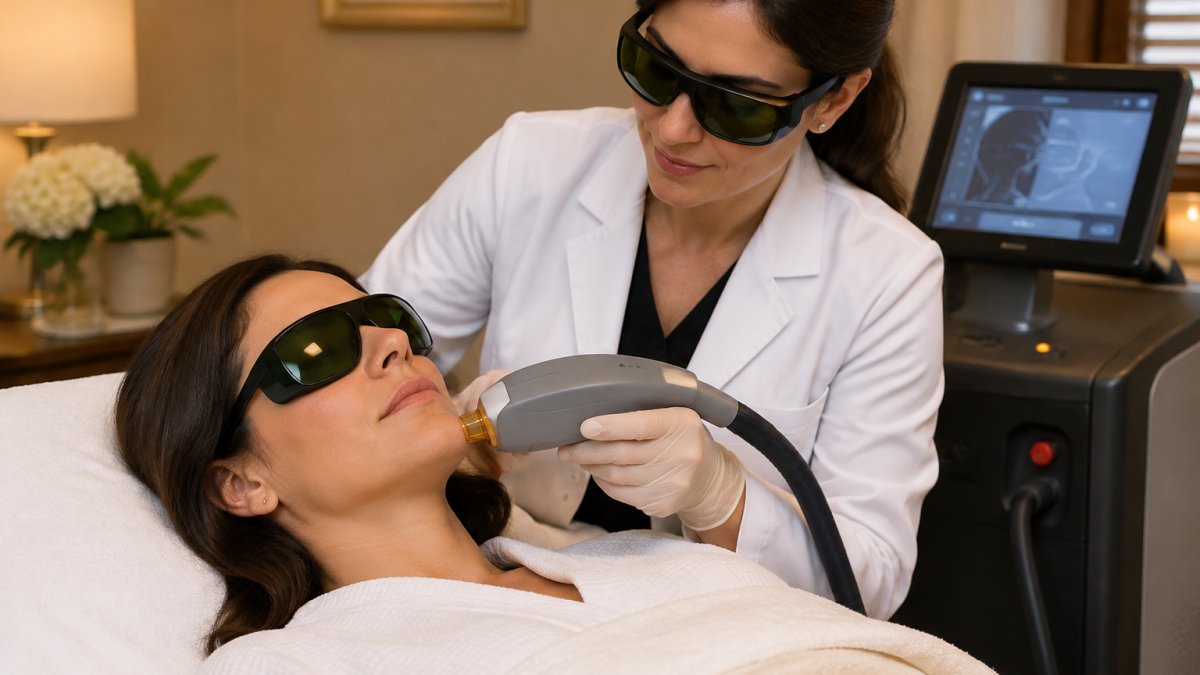
Contact your provider promptly for blistering, severe pain, or worsening skin changes. Eye pain or vision changes need urgent medical attention. Appropriate laser protective eyewear is required during treatment; closing your eyes is not a substitute.
Questions to Bring to Your Consultation
- Is the hair I want treated likely to respond, and which hairs should be left untreated?
- Which device and wavelength are proposed for my skin?
- What experience do you have treating clients with similar skin and hair?
- What risks, including paradoxical growth, apply to this area?
- How will we assess progress and decide whether to continue, adjust, or pause?
- What does the package include, and what happens if I need ongoing maintenance?
Explore Your Options in Stony Brook
Elite Laser Center & Med Spa is a nurse-owned practice led by Sharon McDonough, R.N. We welcome clients from Stony Brook, Setauket, Port Jefferson, Nesconset, and nearby Long Island communities.
Your consultation is an opportunity to ask questions, review suitability, and understand costs before making a decision. There is no need to commit to a procedure simply because you requested information.
Request a complimentary consultation or call 631-675-2500. Visit us at 2308 Nesconset Highway, Stony Brook, NY 11790.
Frequently Asked Questions
Does laser hair removal cure PCOS?
No. It addresses suitable hair, not the underlying hormonal or metabolic condition. Continue appropriate PCOS care with your medical team.
Can PCOS-related hair return after treatment?
Yes. Regrowth or newly developing coarse hairs can occur, and maintenance may be needed. The amount and timing vary; a package cannot guarantee that no future hair will appear.
Can darker skin tones be treated?
Potentially, with appropriate assessment, device selection, and an experienced provider. Skin tone alone is not the entire decision, and no device is suitable for everyone.
Will shaving make my PCOS hair grow thicker?
Shaving does not change the underlying follicle or treat PCOS. A blunt cut hair can feel coarser as it grows out. Follow your provider's preparation instructions rather than substituting waxing or plucking.
What if some of my hair is white or gray?
Those hairs generally lack a suitable laser target. Discuss alternatives such as electrolysis instead of assuming additional laser sessions will change their response.
What does laser hair removal for PCOS cost?
Your quote depends on the treatment area and plan. Ask for package inclusions, the maximum number of treatments, follow-up terms, and any ongoing maintenance costs. Call Elite at 631-675-2500 for current pricing.
Sources
- International Evidence-based PCOS Guideline: recommendations on hair growth and laser treatment
- FDA: Polycystic ovary syndrome
- American Academy of Dermatology: Laser hair removal FAQs
- American Academy of Dermatology: Preparing for laser hair removal
- American Academy of Dermatology: Hair removal methods
- Systematic review: Paradoxical hypertrichosis after laser and light hair removal
General educational information prepared with AI assistance. Results and recovery vary. This article does not replace an individual medical assessment.