 blog
Can You Actually Get Rid of Stretch Marks After Pregnancy?
Last Updated: November 21, 2026
Quick Summary
You can improve stretch marks after pregnancy with five approaches: prescription retinoids for newer red or purple marks, moisturizer and massage while breastfeeding, barrier-support creams, C-section-safe timing, and in-office microneedling, laser, or peels. Marks rarely disappear completely, but treatment can soften color and texture.
- Red or purple marks respond best to treatment; white or silver marks are harder to improve.
- Prescription retinoids like tretinoin have the strongest research for newer marks but take months.
- While nursing, use fragrance-free moisturizer twice daily and skip retinoids and strong peels.
- After a C-section, wait for incision healing and provider clearance before treating surrounding skin.
- In-office plans are usually a series of sessions, with results building gradually over months.
Table of Contents
- Why Stretch Marks Appear After Pregnancy and What Actually Fades Them
- 1. Prescription Retinoids: The Best-Supported Topical for Newer Marks
- 2. How to Get Rid of Stretch Marks After Pregnancy While Breastfeeding
- 3. Choosing an After Pregnancy Belly Stretch Marks Removal Cream
- 4. How to Remove Stretch Marks After C-Section Delivery
- 5. In-Office Treatments: Microneedling, Laser Therapy, and Chemical Peels
- Book a Stretch Mark Consultation at Elite Laser Center & Med Spa
- Frequently Asked Questions
Why Stretch Marks Appear After Pregnancy and What Actually Fades Them
Stretch marks after pregnancy are narrow lines in the skin that form when the dermis stretches faster than its support fibers can adapt. The dermis is the middle layer of skin, and it holds collagen and elastin, the proteins that keep skin firm and springy.
Genetics, hormones, and how fast your belly grows all play a part. So does skin elasticity before pregnancy.
Here is the honest part most guides skip. Stretch marks rarely disappear completely. The American Academy of Dermatology's overview of stretch marks makes the same point: improvement is realistic, erasure is not.
Red, Purple, and White Marks: Why Age and Color Change Your Options
Mark color tells you how old a stretch mark is, and that changes what may help.
- Red or purple marks (striae rubrae): Newer marks with active blood flow. These respond best to treatment.
- White or silver marks (striae albae): Older marks where the skin has lost pigment and thinned. These are harder to improve.
So timing matters. A red mark treated early often responds better than a white mark of the same size. If you are planning treatment, sooner tends to be better than later.
If you are also thinking about body changes beyond stretch marks, our guide to postpartum body contouring covers timing, options, and risks.
1. Prescription Retinoids: The Best-Supported Topical for Newer Marks
Prescription retinoids are vitamin A creams, such as tretinoin, that speed up skin cell turnover and support collagen production (pubmed.ncbi.nlm.nih.gov). They have the strongest research behind them for newer stretch marks.
The catch: they take months, not weeks. And they are not for everyone.
- Best for: red or purple marks, and people who are not pregnant or breastfeeding
- How to use: a pea-sized amount on each mark at night, as directed
- Watch out: retinoids can cause redness, peeling, and sun sensitivity. Start slow and use sunscreen daily.
Tretinoin is prescription-only, so this starts with a clinician visit. Do not use retinoids while nursing, and confirm with your provider before using them at any other stage of pregnancy or postpartum recovery.
2. How to Get Rid of Stretch Marks After Pregnancy While Breastfeeding
Breastfeeding does not mean you have to do nothing. It means the plan changes. The goal during nursing is to support the skin barrier, keep marks comfortable, and avoid ingredients whose safety during lactation has not been established, then escalate once you stop nursing.
Topical products applied to the abdomen can be absorbed in small amounts, and the concern with prescription retinoids is largely a lack of adequate safety data during nursing. Many clinicians take the cautious path and advise against topical tretinoin while breastfeeding, because safety data during nursing is limited.
A Staged Plan for the Nursing Months
- Barrier and hydration first. Apply a fragrance-free moisturizer to damp skin twice daily. Look for hyaluronic acid, glycerin, panthenol, and ceramides. These hold water in the skin and soften the feel of marks without introducing ingredients that need lactation review.
- Gentle massage. Two minutes of light massage over the marks supports blood flow and helps you stay consistent. It will not erase marks, but it keeps the skin supple.
- Sun protection. Newly stretched skin and any mark that is still red or purple can darken with sun exposure. Cover the area or use a broad-spectrum sunscreen on exposed skin.
- One change at a time. Introduce a single new product, use it for a couple of weeks, and note how your skin responds. Stacking several new actives at once makes it impossible to tell what helped or what irritated.
What to Skip While Nursing
- Prescription retinoids such as tretinoin
- High-strength chemical peels and resurfacing acids
- Any new active ingredient, including "natural" essential oils, without checking with your provider first
- Creams marketed with claims to erase or remove marks
Watch out: "natural" and "clean" labels are not safety assurances during lactation. Check any botanical oil or extract with your provider before using it while nursing.
When to Escalate After Nursing Ends
Once you stop breastfeeding, many people discuss stronger options with their provider, such as prescription retinoids for newer red or purple marks and in-office treatments for texture and tone. Tell your provider your full history, delivery type, healing so far, and how long ago you stopped nursing, so the plan fits your stage rather than a generic timeline.
If you are weighing in-office options for after nursing, our guide to postpartum body contouring covers timing and what to expect from consultation through recovery.
3. Choosing an After Pregnancy Belly Stretch Marks Removal Cream
Creams cannot remove stretch marks. Moisturizers may hydrate and soften the texture of the skin while it heals. That is the realistic job.
What to look for in an after pregnancy belly stretch marks removal cream:
- Hyaluronic acid: a humectant that draws water into the skin
- Centella asiatica and aloe vera: commonly used soothing ingredients
- Cocoa butter, almond oil, or coconut oil: emollients that help hold moisture in
- Niacinamide: an ingredient often included in barrier-support products
What to skip: creams promising to erase marks, and anything with undisclosed "secret" ingredients. Massage the cream in for a minute or two. The motion helps blood flow, and the habit helps you stay consistent.
4. How to Remove Stretch Marks After C-Section Delivery
A C-section adds a scar to the picture, so timing changes. Wait until your incision is fully healed and your provider clears you before treating the surrounding skin.
Then work in this order:
- Get clearance from your OB or midwife
- Let the scar settle, which usually takes weeks
- Start with gentle moisturizing and massage away from the incision
- Ask about in-office options once healing is complete
Never apply strong actives directly on a healing scar. If the scar looks raised, red, or painful, mention it at your postpartum visit.
5. In-Office Treatments: Microneedling, Laser Therapy, and Chemical Peels
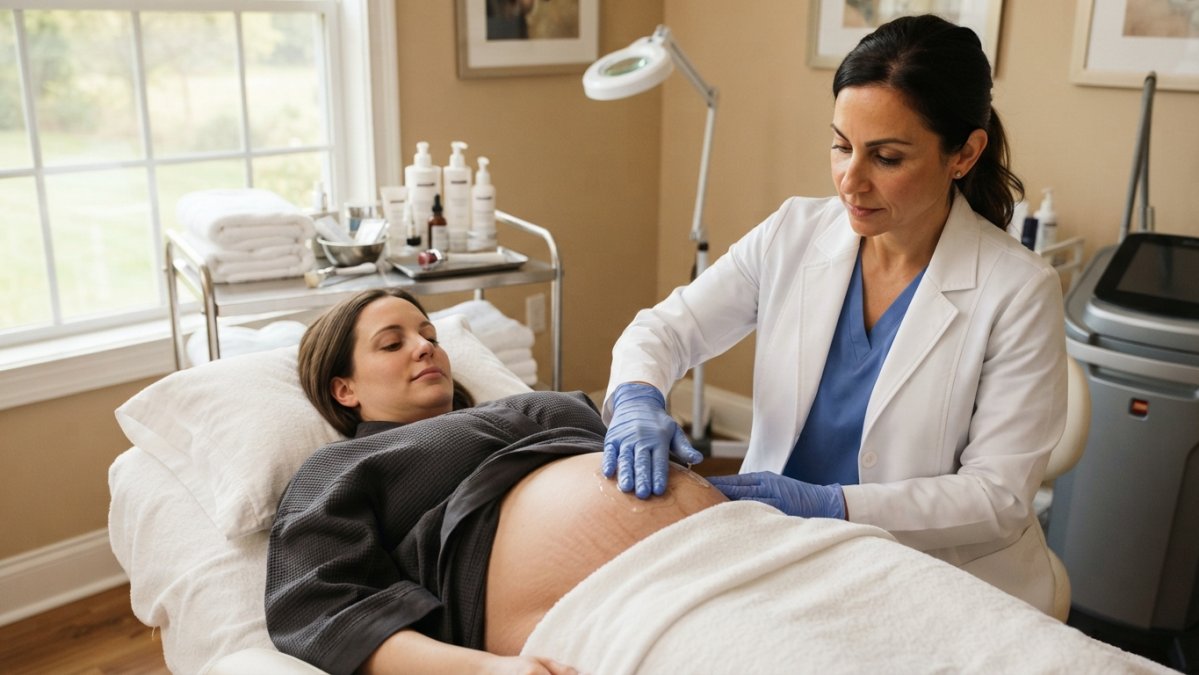
In-office treatments are often considered for stretch marks, including older white marks that topical products may not reach. But "in-office" is not one thing. Because these treatments can soften rather than erase marks, claiming your stretch marks may also mean deciding how you want to acknowledge them as part of your skin.
Match the Treatment to the Mark
Mark age and color should drive the choice more than anything else.
- Red or purple marks (striae rubrae): Still have active blood flow and respond best to treatments that target color and early collagen change. Vascular-focused laser and light options and early microneedling series are common starting points.
- White or silver marks (striae albae): The skin has thinned and lost pigment. These need treatments that rebuild collagen and texture, microneedling, RF microneedling, and resurfacing peels, and they improve more slowly and less completely than newer marks.
- Mixed patterns: Most people have both. A provider may combine approaches across a series rather than commit to one device.
How the Main Options Compare
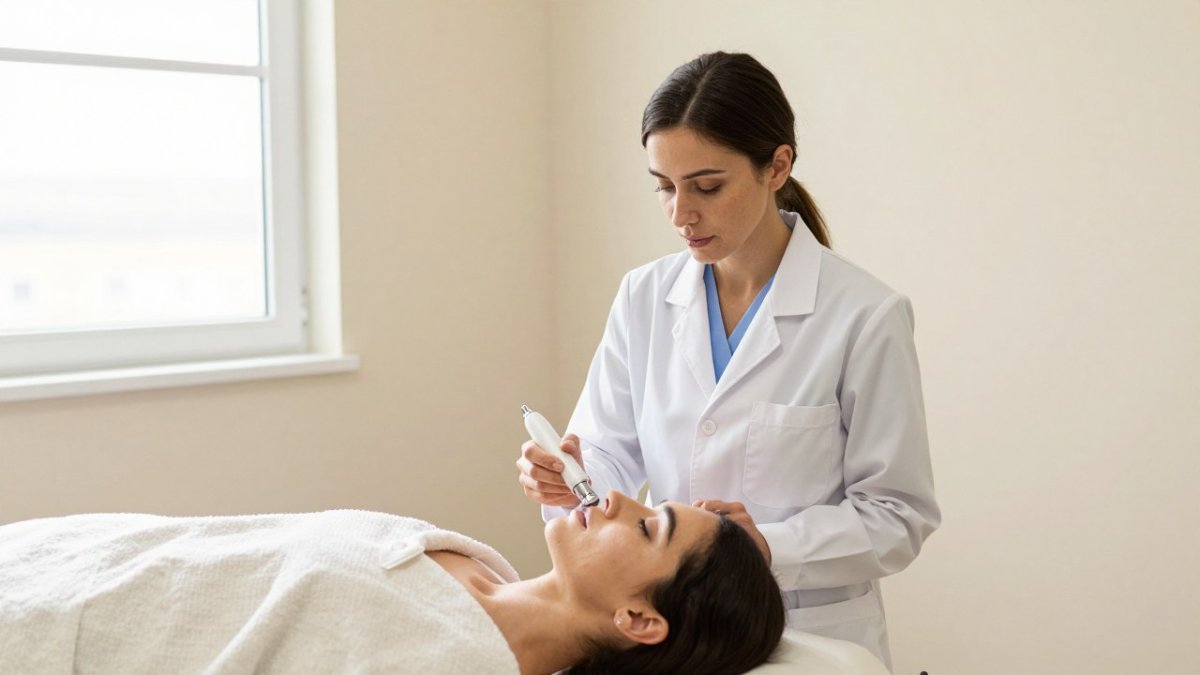
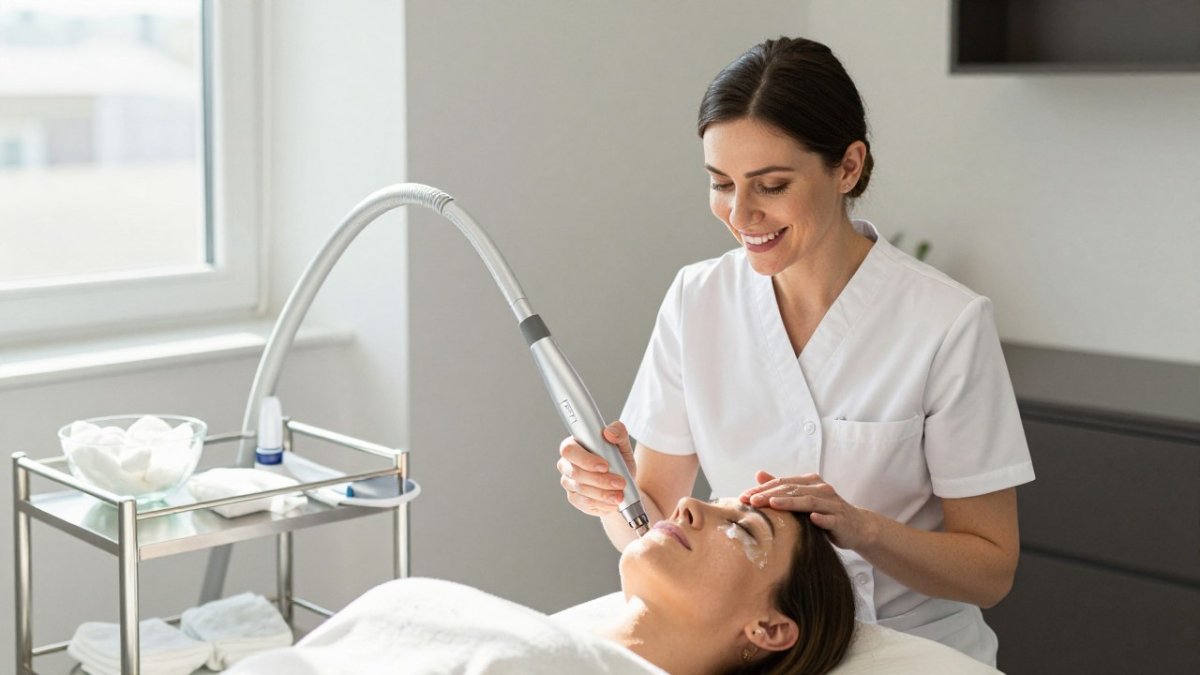
Microneedling creates tiny controlled punctures that trigger the skin's collagen response. To compare it against peels, see our guide on RF microneedling versus chemical peels, or read our RF microneedling treatment review for results and recovery.
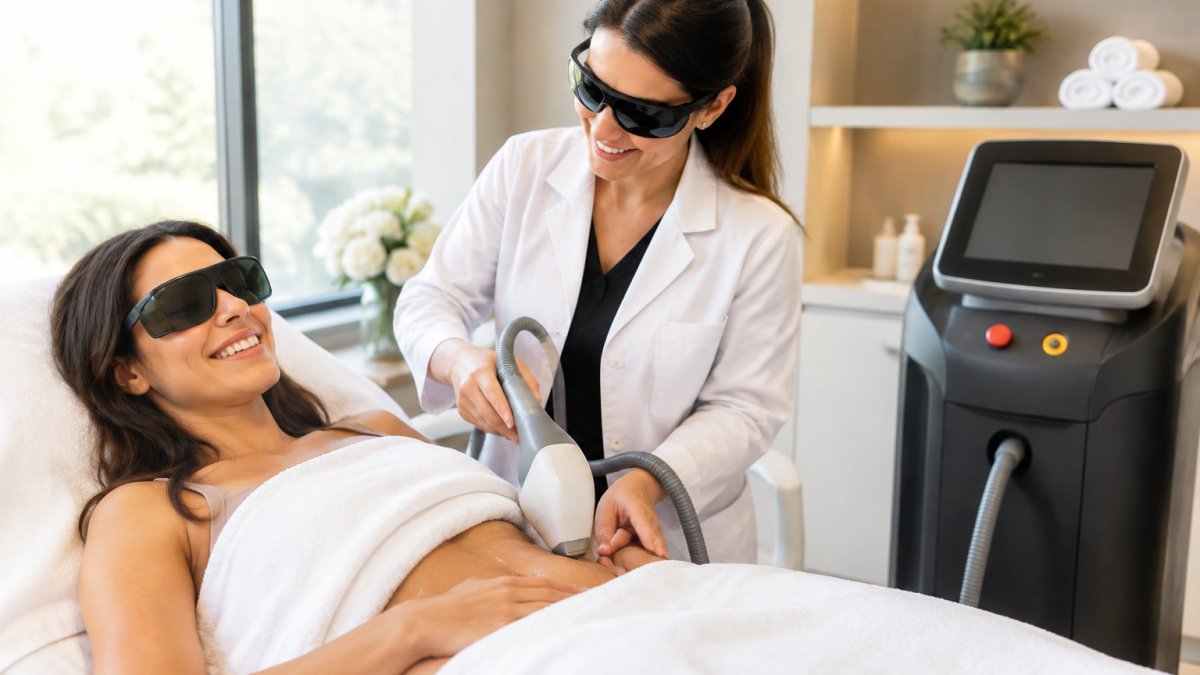
Laser therapy uses light energy to stimulate collagen and improve skin tone and color.
Chemical peels remove the top layer of skin to reveal fresher skin beneath and can improve surface texture and dullness. Our guide to chemical peels explains recovery and aftercare, and not every option is a no-downtime treatment.
Realistic Sessions, Recovery, and Expectations
Most in-office stretch mark plans are a series, not a single visit. A common pattern is several sessions spaced weeks apart, with results building gradually over months as collagen remodels. Recovery ranges from a day or two of redness after microneedling to a week or more of visible peeling after a stronger peel. No in-office treatment erases stretch marks completely; the realistic goal is softer color, smoother texture, and marks that are less noticeable.
Watch out: a package or series is a treatment plan, not a guarantee of a specific result. Ask what improvement is realistic for your mark type and skin tone before you commit to a series.
Stretch Mark Treatments and Recovery Time
| Treatment | Typical Sessions | Downtime | Best For |
|---|---|---|---|
| Prescription retinoid | Daily, 3-6 months | Mild peeling | New red or purple marks |
| Moisturizer and massage | Twice daily | None | Hydration and texture |
| Microneedling | Series of visits | 1-3 days redness | Texture and tone |
| RF microneedling | Series of visits | A few days | Texture, tone, and collagen support |
| Laser therapy | Series of visits | A few days | Color and collagen support |
| Chemical peel | Series of visits | 2-7 days peeling | Surface texture |
Session counts and recovery vary by person, so treat this as a starting point, not a promise. A consultation is where the plan gets specific to your marks, your skin tone, and your timeline.
Book a Stretch Mark Consultation at Elite Laser Center & Med Spa
Stretch marks after pregnancy are common, and improvement is realistic with the right plan for your skin, your stage, and your goals. The first step is an honest consultation.
At Elite Laser Center & Med Spa in Stony Brook, our team is led by Sharon McDonough, R.N., and services are performed or supervised by a nurse. We walk you through what is recommended, why it fits your goals, the cost, and what results to expect. Learn about financing options for cosmetic treatments before you come in.
Call 631-675-2500 to schedule your consultation. Get started with Elite Laser Center & Med Spa and build a plan you actually understand.
Frequently Asked Questions
Is it possible to get rid of stretch marks after pregnancy?
Stretch marks can improve but rarely disappear completely. The dermis tears when skin stretches faster than collagen and elastin can keep up, and no cream or procedure rebuilds that tissue perfectly. What treatment can do is soften texture and bring color closer to your surrounding skin. Newer red or purple marks respond best; older white marks typically need in-office options such as microneedling or laser therapy. A consultation helps set a realistic target before you commit to a plan.
How can you treat stretch marks after pregnancy while breastfeeding?
Many people start with moisturizers and gentle massage during nursing. Retinoids such as tretinoin are often advised against until breastfeeding is finished, and you should ask your provider about any active ingredient before applying it to your belly or breasts. In-office treatments can often be planned for after nursing ends, so use the postpartum months to build a home routine and book a consultation to map out timing. Always confirm safety with your own obstetric or primary care provider.
How long do stretch marks take to fade after pregnancy?
Many marks gradually shift from red or purple toward white over time, and the pace varies by person and skin tone. Topical routines and in-office treatments usually need weeks to months of consistent use before changes are visible, and results are gradual rather than overnight. Photographs taken in the same light each month are a better progress measure than daily mirror checks. Your provider can reassess at intervals and adjust the plan.
Can stretch marks from a C-section be treated?
Yes, once your incision is fully healed and your obstetric provider clears you. Marks near the scar can be addressed with creams, microneedling, or chemical peels, but the scar itself needs its own assessment and may call for a different approach. Tell your treating provider about numbness, tenderness, or scar sensitivity so pressure and products are adjusted. Timing matters, so plan treatment after the healing window your surgeon recommends rather than during early recovery.