 ultimate-guide
Does Laser Really Remove Hair Permanently? Facts
Table of Contents
- What Laser Hair Removal Actually Does to Hair Follicles
- Is Laser Hair Removal Permanent? What the FDA Says
- How Many Laser Hair Removal Sessions Are Needed?
- Factors That Affect Your Results: Hormones, Skin Tone, and Hair Color
- Laser Hair Removal Maintenance Sessions: The Reality Nobody Explains
- Laser Hair Removal on Long Island: What to Look for in a Provider
- Side Effects, Aftercare, and Post-Treatment Shedding vs. Regrowth
- Frequently Asked Questions
Last Updated: September 14, 2026
What Laser Hair Removal Actually Does to Hair Follicles
Does laser really remove hair permanently? The honest answer is that laser hair removal produces long-term hair reduction, not guaranteed permanent removal for every follicle. At Elite Laser Center Medical Spa in Stony Brook, we explain this distinction before treatment begins.
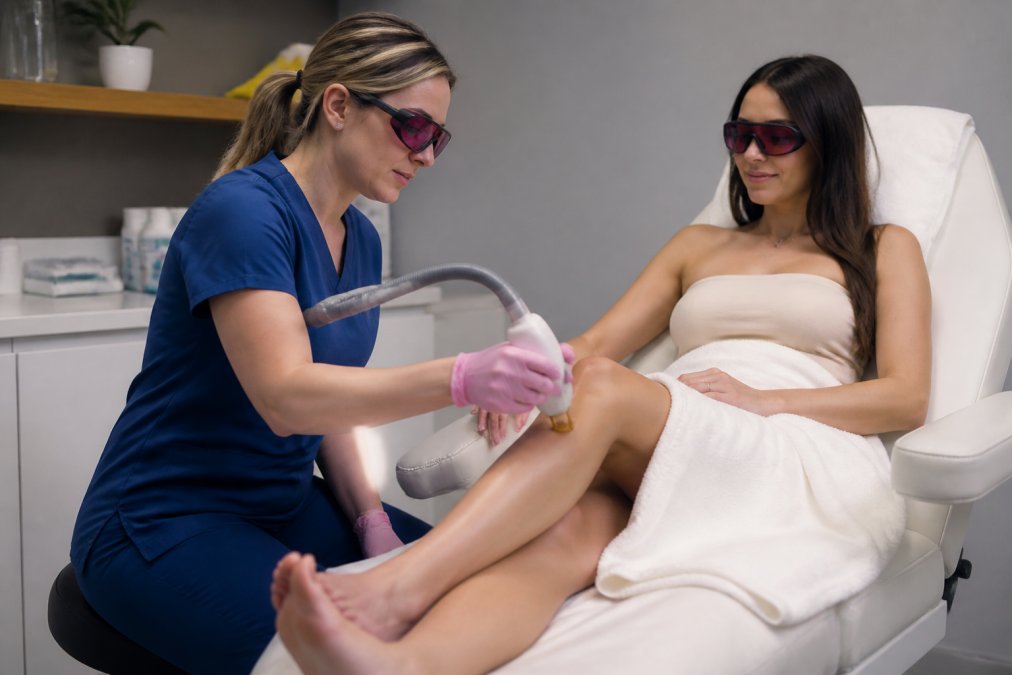
Laser hair removal is a light-based treatment that targets pigment in the hair follicle to reduce future growth. The device emits a wavelength absorbed by melanin inside the follicle, converting to heat that damages the structures producing hair. Because the laser follows pigment, it works best on dark hair against lighter skin, though modern devices safely treat a wider range of skin tones and hair colors.
Why Melanin and Wavelength Matter
Melanin gives hair and skin their color and is the target that makes laser treatment possible. The wavelength must be long enough to reach the follicle without being absorbed entirely by pigment in the epidermis. Shorter wavelengths carry more risk on darker skin, which is why device choice and operator skill matter as much as session count.
Is Laser Hair Removal Permanent? What the FDA Says
The FDA describes these devices as clearing hair for long periods, not eliminating it forever (Product Classification). Most are cleared for permanent hair reduction, a term that reflects how the technology performs, and why we never promise every hair is gone for good.
Hair Reduction vs. Hair Removal: The Difference That Matters
Permanent hair reduction means a long-term decrease in hairs regrowing in a treated area after a course of sessions. Permanent hair removal would mean every treated follicle never produces hair again, which laser devices are not cleared to claim. Some follicles are destroyed, others damaged for years, and a smaller number recover. Understanding the regulatory distinction between these outcomes is essential when evaluating FDA cleared devices and the specific clinical standards they must meet to be marketed for hair reduction.
How Many Laser Hair Removal Sessions Are Needed?
Most people need a series of sessions spaced several weeks apart, because hair grows in cycles and the laser only affects follicles in the active growth phase, known as the anagen phase (pubmed.ncbi.nlm.nih.gov). Hairs resting or shedding at treatment are unaffected, so one visit never clears an area.
A typical plan involves multiple sessions across several months, with intervals set by the provider based on the area, hair density, and how your skin responds. Dense, coarse hair often needs more sessions than fine or sparse growth. Your provider will map out the expected number of visits during your consultation.
| Factor | Why It Affects Session Count | What It Means for You |
|---|---|---|
| Hair growth cycle | Only active-phase follicles respond | Sessions must span several weeks |
| Hair color and thickness | Coarse dark hair absorbs light best | Fine or light hair may need more visits |
| Skin tone | Darker skin needs careful settings | Device choice and skill matter more |
| Treatment area | Larger, denser areas take longer | Back and legs need more sessions than upper lip |
| Hormonal factors | Hormones can drive new growth | Maintenance may be needed |
Factors That Affect Your Results: Hormones, Skin Tone, and Hair Color
Results vary widely, and three factors drive most of that variation: hormones, skin tone, and hair color. Understanding them before you start helps you judge whether laser is the right fit and how much maintenance you may need.
Hormonal Influence on Hair Regrowth
Hormones can stimulate new hair growth even after successful treatment, one of the most under-explained realities of laser hair removal. Conditions such as PCOS, pregnancy, menopause, and thyroid changes can shift the signals that tell follicles to produce hair (pubmed.ncbi.nlm.nih.gov). Laser still works for people with these conditions, but results may require ongoing maintenance.
Skin Tone and Hair Color Limitations
Laser energy follows pigment, so contrast between hair and skin affects results. Dark, coarse hair on lighter skin responds most predictably; light, fine, or gray hair lacks enough melanin to target effectively. Darker skin tones can be treated safely with the right device and settings, which is why experience treating all ethnic skin types is a genuine qualification.
Laser Hair Removal Maintenance Sessions: The Reality Nobody Explains
Maintenance sessions are the part of the process most providers gloss over, and skipping them is why some people feel their hair "came back." After your initial series, occasional maintenance visits keep regrowth in check, with frequency depending on your hormones, the area treated, and how your follicles responded.
The honest framing: laser is not a one-time purchase but a long-term relationship with your skin. Once the initial series ends, a small percentage of follicles that were only damaged, not destroyed, can gradually resume producing hair, and hormonal shifts can recruit new ones. Maintenance keeps you ahead of both.
A Realistic Maintenance Schedule by Area
There is no single schedule that fits everyone, but a common pattern looks like this:
| Area | Typical maintenance cadence after the initial series | Why |
|---|---|---|
| Upper lip, chin, sideburns | Every 4-8 months | Hormone-sensitive; small area, quick touch-ups |
| Underarms, bikini | Every 6-12 months | Moderate density, less hormonal drive than the face |
| Legs, back, chest | Every 9-18 months | Larger surface, slower regrowth, longer intervals |
| Any area, with PCOS, thyroid, or menopause | Every 3-6 months | Ongoing hormonal signaling can recruit new growth |
These are starting points, not rules; your provider will adjust based on what they see at each visit.
What Triggers a Maintenance Visit
You do not need to wait for a calendar date. Most clients book a maintenance session when they notice one of three things:
- A visible return of darker, coarser hairs in an area that had been mostly clear.
- A change in density, even if individual hairs are still fine.
- A known hormonal event, starting or stopping hormonal birth control, pregnancy, perimenopause, a thyroid medication change, that your provider has flagged as likely to shift growth.
Why Skipping Maintenance Backfires
When clients skip maintenance for a year or more, accumulated regrowth can look dramatic, enough that some assume the original treatment "failed." It did not. The permanently disabled follicles stayed disabled; the small percentage of surviving follicles simply had time to cycle back into active growth uninterrupted. One maintenance session usually resets the area; a long gap may require two or three.
How Maintenance Is Priced and Planned
Ask your provider how maintenance is handled before you commit to the initial series. Some practices bundle a set number of maintenance visits into the original package; others charge per session. Either model can be fair, what matters is that you know which one you are buying.
Laser Hair Removal on Long Island: What to Look for in a Provider
Choosing the right provider matters more than the device brand, because settings, technique, and medical oversight determine both safety and results. Look for a practice where treatments are performed or supervised by a nurse, where the team has experience with your skin tone, and where the plan and pricing are explained before you commit.
Ask direct questions during your consultation: Who performs the treatment? How many sessions does my area typically need? What happens if hair regrows? A confident provider answers without hesitation. At Elite Laser Center Medical Spa, every service is performed or supervised by a nurse, and laser hair removal packages carry a 3-year guarantee.
Side Effects, Aftercare, and Post-Treatment Shedding vs. Regrowth
Mild, temporary side effects are normal, and knowing the difference between shedding and regrowth prevents unnecessary worry. Expect redness (erythema) and slight swelling around the follicles (perifollicular edema) right after treatment, usually settling within hours to a day or two. Some clients also notice a faint "sunburn" sensation or small temporary bumps at the follicle openings, all signs the laser reached its target.
The Timeline: What Happens Day by Day
| Timeframe | What you may see | What it means |
|---|---|---|
| First few hours | Redness, warmth, mild swelling around follicles | Normal inflammatory response |
| Days 1-3 | Treated hairs appear to grow faster or look darker | The hairs are being pushed out, not growing |
| Days 5-21 | Hairs fall away, sometimes in the shower or on clothing | Shedding, the desired result |
| Weeks 3-8 | Area looks noticeably clearer, then may seem to "stall" | Follicles in resting phase are unaffected by that session |
| Weeks 6-12+ | Finer, sparser hairs appear | True regrowth, expected, and the reason for the next session |
Shedding vs. Regrowth: How to Tell Them Apart
The most common source of confusion after a laser session is mistaking shedding for regrowth. They look similar but behave very differently.
Shedding is the treated hair releasing from the follicle. It typically starts 5-14 days after a session and continues for up to three weeks. Shed hairs often look thicker or darker because they are full-length treated hairs working their way out; if you gently tug one, it slides free with no resistance. This is the sign the treatment worked.
Regrowth appears later, usually six weeks or more after a session, and looks different. Regrown hairs tend to be finer, lighter, and sparser than the original hair, and they do not slide out when tugged because they are anchored in the follicle. Some regrowth between sessions is expected, not a failure, it is why a series is scheduled across several months rather than in a single visit.
Aftercare That Protects Your Results
What you do in the first two weeks after a session affects both comfort and outcome:
- Sun protection is non-negotiable. Treated skin is more sensitive to UV, and sun exposure can cause hyperpigmentation, especially on darker skin tones. Use broad-spectrum SPF 30 or higher on exposed treated areas.
- Skip heat for 24-48 hours. Hot baths, saunas, steam rooms, and intense workouts can aggravate freshly treated skin.
- Avoid harsh actives for a few days. Retinoids, exfoliating acids, and strong scrubs can irritate the area. Gentle cleanser and moisturizer are enough.
- Do not wax, pluck, or thread between sessions. These remove the hair from the follicle and prevent the laser from reaching its target at the next visit. Shaving is fine.
- Let the shedding happen naturally. Do not pick at hairs that are working their way out.
When to Call Your Provider
Most side effects are mild and self-limiting. Contact your provider if you notice blistering, prolonged crusting, a rash spreading beyond the treated area, or pigment changes that do not fade within a few weeks, uncommon but worth reporting, especially with a history of keloids, active skin infections, or photosensitizing medications.
Frequently Asked Questions
Is laser hair removal considered permanent by the FDA?
The FDA uses the term "permanent hair reduction" rather than "permanent hair removal." This means FDA-cleared devices can significantly reduce the number of hairs that regrow over time, but they do not guarantee that every hair follicle is destroyed forever. Results depend on factors like hair color, skin tone, hormonal health, and how consistently you complete your treatment plan. Many people see 70-90% reduction in treated areas, with remaining hairs becoming finer and lighter.
How many laser hair removal sessions are needed for long-term results?
Most people need six to eight sessions spaced four to six weeks apart to see substantial hair reduction. The exact number depends on the treatment area, your hair growth cycle, and individual factors like hormones. Hair grows in different phases, and laser only affects follicles in the active anagen phase, which is why multiple sessions are necessary. Your provider will assess progress at each visit and adjust the plan as needed.
Does hair grow back after laser hair removal?
Some hair can regrow, especially in areas influenced by hormones like the face, neck, and chin. This is why maintenance sessions matter. After your initial series, you may need periodic touch-ups once or twice a year to keep results. Post-treatment shedding is normal and expected within the first few weeks; this is dead hair falling out, not new growth. True regrowth appears as finer, sparser hair over time.
What factors influence the longevity of laser hair removal results?
Hormonal conditions like PCOS, thyroid disorders, and menopause can trigger new hair growth even after successful treatment. Hair color and skin tone also play a role: laser works best on dark, coarse hair against lighter skin, though advanced devices now safely treat a wider range of skin phototypes. Consistency with your session schedule and avoiding sun exposure between treatments help protect your results. Your provider can tailor a plan based on your specific situation.