 blog
How to Choose the Best Soothing Cream After Laser Hair Removal
What to look for in a gentle moisturizer, which ingredients to pause, and when post-treatment irritation needs professional attention.
Last Updated: November 1, 2026
After laser hair removal, your skin may feel warm, tender, or more sensitive than usual. It is natural to want a cream that settles everything immediately, but there is no single product proven to work fastest for everyone.
A practical starting point is a gentle, fragrance-free moisturizer that your treatment provider approves. The complete formula, your previous tolerance, and when you apply it matter more than an impressive list of “calming” ingredients.
At Elite Laser Center & Med Spa in Stony Brook, discuss aftercare before your appointment so you know which products to use and when to restart your regular routine.
Start With Your Provider’s Aftercare Instructions
Laser hair removal targets hair follicles; it is different from resurfacing procedures that intentionally remove or injure layers of skin. A product promoted for “post-laser recovery” may have been designed for a different procedure.
Ask your provider to explain:
- Which cleanser and moisturizer to use on the treated area.
- When you can first apply them.
- How to protect exposed skin from the sun.
- When to resume deodorant, makeup, shaving, exercise, and active skincare.
- How to contact the practice about a reaction.
Aftercare protocols vary. Do not assume a product is suitable immediately after treatment simply because a general article recommends it.
What to Look for in a Soothing Cream
Fragrance-Free Formulation
Choose fragrance-free over scented products while your skin is sensitive. “Unscented” is not the same label: a product may contain ingredients that mask an odor. Essential oils and botanical extracts are not automatically gentler because they are described as natural.
A familiar product you tolerate may be a better choice than trying several new formulas at once. Ask your provider to review the actual product, not just the marketing description.
Moisturizing Ingredients
These common ingredient types have useful roles in moisturizers, but their presence does not establish that one cream will speed recovery after laser hair removal:
Ingredient | General role in a moisturizer | What to keep in mind |
|---|---|---|
Glycerin | Helps attract and retain water | The complete formula still determines comfort and tolerance |
Ceramides | Help support the skin’s moisture barrier | Not every post-treatment reaction reflects a ceramide deficiency |
Hyaluronic acid | Helps bind water | It can be part of a moisturizer; a separate serum is not essential |
Dimethicone or petrolatum | Helps reduce moisture loss | Use the texture and amount your provider recommends |
You do not need every ingredient on this list. A simple routine can be easier to follow and makes it easier to identify a product that causes irritation.
A Texture That Suits the Area
A lightweight lotion may feel comfortable on an oily face or a larger body area. Drier skin may prefer a cream. Neither a gel nor a thick balm is automatically best after treatment.
Avoid choosing solely by body-area rules such as “all facial skin needs a gel” or “all leg treatments need a heavy cream.” Skin condition, product tolerance, and the treatment response are more useful guides.
Can You Use Aloe Vera After Laser Hair Removal?
Some aftercare protocols include aloe vera gel for comfort. If your provider recommends it, check the full formula for fragrance or drying alcohol and mention any previous reaction to aloe.
A cooling sensation does not prove that a product treats a burn or prevents a complication. Aloe is optional, not a requirement, and it should not be used to manage worsening pain or blistering without professional advice.
Products and Ingredients to Pause
While the area is sensitive, your provider may recommend temporarily avoiding:
- Fragranced body lotions, perfumes, and essential oils on the treated skin.
- Exfoliating acids, scrubs, and abrasive cleansing tools.
- Retinoids and other potentially irritating acne or anti-aging products.
- Astringent toners or products that sting when applied.
Not every ingredient with “alcohol” in its name behaves the same way. Fatty alcohols such as cetyl and cetearyl alcohol are common moisturizer ingredients and differ from drying alcohol-heavy toners.
For prescription products, ask your prescriber or treatment clinician about any changes. Do not assume you should stop a medication based on a generic skincare list.
How to Apply an Approved Moisturizer
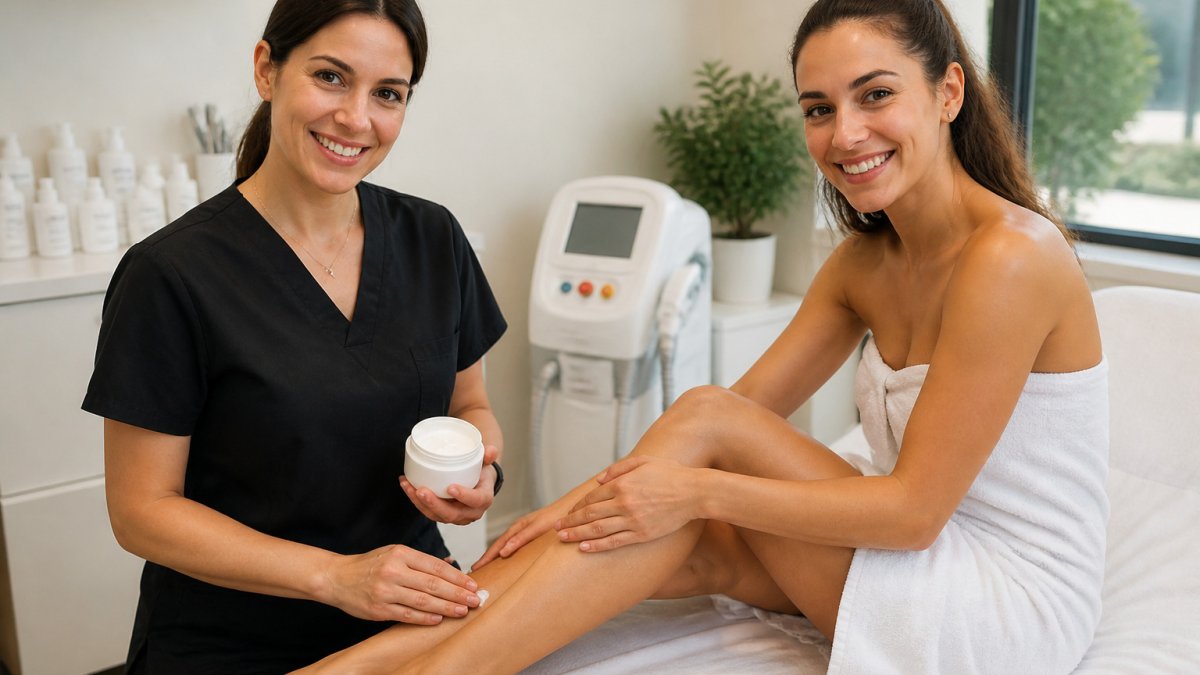
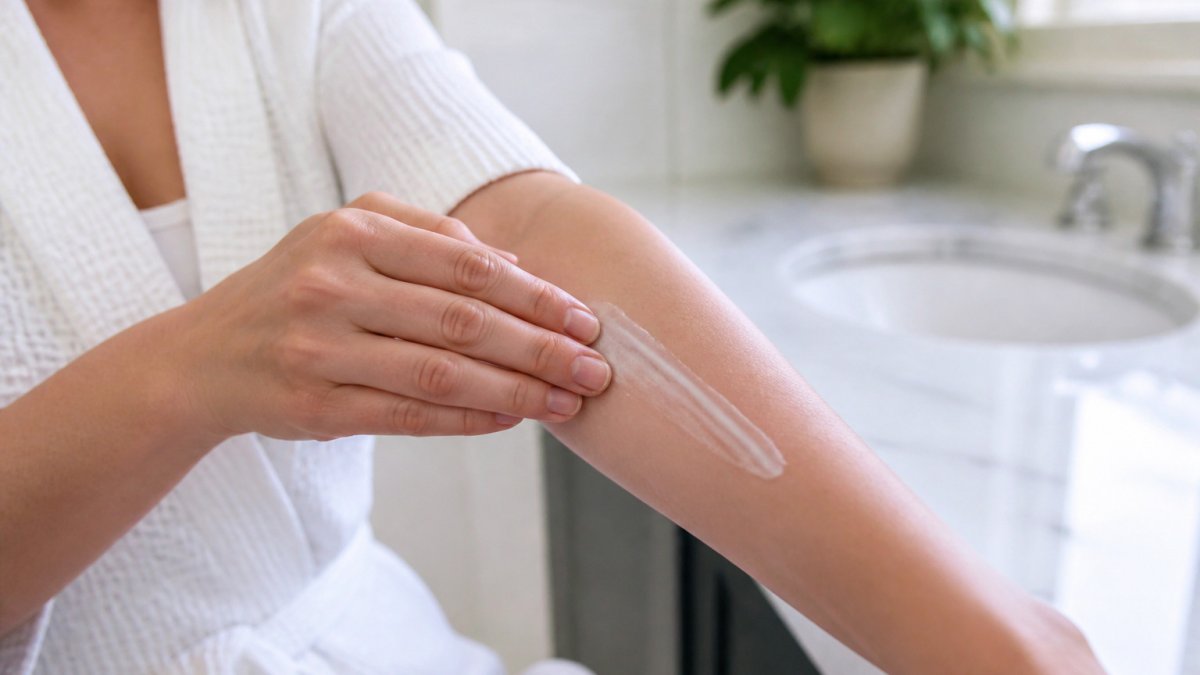
Once your provider says you can use it, wash your hands and apply the product gently to intact skin. Follow the recommended amount and frequency. Avoid rubbing repeatedly or layering several new products over the same area.
If you want to introduce a new moisturizer, discuss testing it on untreated skin before your laser appointment. A home test cannot guarantee that freshly treated skin will tolerate it.
If a product causes burning, worsening redness, or a rash, stop using it and contact your provider. Blistered, open, or weeping skin needs assessment rather than experimentation with creams.
What Recovery Usually Looks Like
The American Academy of Dermatology describes mild discomfort, redness, and swelling as common short-term effects, often lasting one to three days. Individual responses differ, and a darker skin tone may show irritation differently from a lighter one.
A cool compress may help discomfort. Avoid direct ice contact with the skin, picking, and rubbing. Follow your own instructions about heat, friction, exercise, and hot water rather than relying on a fixed internet timetable.
Protect the area from direct sun and tanning. Use shade and suitable clothing, and follow your provider’s guidance about when to apply broad-spectrum SPF 30 or higher sunscreen.
When to Call Your Provider
Contact the practice promptly for blisters, crusting, significant pain, worsening swelling, or an unexpected change in skin color. Spreading redness, pus, fever, or rapidly worsening symptoms need prompt medical attention.
Do not wait for a suggested “recovery window” to pass if the reaction is getting worse. A moisturizer may improve comfort, but it cannot determine whether a reaction is normal or treat every complication.
Shaving and Hair Removal Between Sessions
Ask when shaving can resume based on how the area feels and heals. Avoid waxing, plucking, threading, and epilation during a laser series unless your provider directs otherwise, because these remove hair from the follicle.
Depilatory creams dissolve hair rather than removing it at the root, but they can irritate treated skin. Their suitability and timing should be discussed separately. Do not scrub or pick to force treated hairs to shed.
Plan Your Aftercare in Stony Brook
Elite Laser Center & Med Spa offers laser hair removal using Lumenis LightSheer and Alma Soprano technologies. Your consultation is an opportunity to discuss your skin, treatment area, medications, previous reactions, and aftercare products.
Bring photos or names of the products you already use. A written plan can help you avoid unnecessary purchases and make it clear whom to contact if you have concerns.
Request a complimentary consultation or call 631-675-2500. Visit us at 2308 Nesconset Highway, Stony Brook, NY 11790.
Frequently Asked Questions
Which cream gets rid of redness fastest?
There is no universal fastest cream. Ask your provider to recommend a gentle formula for your skin and assess redness that is worsening or accompanied by pain or blistering.
Can I use my regular moisturizer?
Possibly, if your provider approves it. Bring the product name and ingredient list, especially if it includes exfoliating or anti-aging ingredients.
Do I need an expensive post-laser serum?
Not necessarily. Ask what benefit it adds to your recommended routine and whether a familiar moisturizer is sufficient.
When can I restart retinol or exfoliating acids?
Use the timing your provider gives you. Resolution of redness alone does not establish that every active product is appropriate to restart.
Sources
- American Academy of Dermatology: Laser Hair Removal FAQs
- Mayo Clinic: Laser Hair Removal
- American Academy of Dermatology: Moisturizer Ingredients
- Mayo Clinic: Moisturizer Tips From a Dermatologist
- Leeds Teaching Hospitals: Laser Hair Reduction
This article provides general education and does not replace your provider’s aftercare instructions or personalized medical advice.
Frequently Asked Questions
Which cream gets rid of redness fastest?
There is no universal fastest cream. Ask your provider to recommend a gentle formula for your skin and assess redness that is worsening or accompanied by pain or blistering.
Can I use my regular moisturizer?
Possibly, if your provider approves it. Bring the product name and ingredient list, especially if it includes exfoliating or anti-aging ingredients.
Do I need an expensive post-laser serum?
Not necessarily. Ask what benefit it adds to your recommended routine and whether a familiar moisturizer is sufficient.
When can I restart retinol or exfoliating acids?
Use the timing your provider gives you. Resolution of redness alone does not establish that every active product is appropriate to restart.